It's more than loading a car on a truck. Pickup windows, trailer choice, inspections, paperwork, and communication all shape the outcome. About 8.2 million people moved between states in 2022, per the Census Bureau. That's a move count, not a shipping count, but it shows how many households face the question of how to get their vehicles across the country.
This guide walks through the process step by step.
Key Takeaways
- Road-based transport moves a road-legal vehicle by carrier truck from origin to destination.
- The steps run from quote and booking to inspection, loading, transit, and delivery check.
- Open trailers suit standard cars; enclosed or flatbed options fit valuable, low-clearance, or oversized vehicles.
- The bill of lading, photos, and a delivery inspection protect you.
What Is Road-Based Vehicle Transport?
Road-based vehicle transport is the professional movement of a vehicle on a carrier truck or trailer over public roads, from pickup to delivery. You skip the added mileage, the multi-day drive, and the hassle of managing a trailer.
It is not driving the car yourself, towing it with a private trailer, or rail transport. It also isn't the ocean leg of an international shipment, though a vehicle may still travel by road to or from the port.
The highway network is why this model dominates in the U.S. Trucks can reach homes, dealerships, auction sites, businesses, and storage facilities, as long as the driver can access the location safely.
Transport Methods and Shipment Models
No single method is best. Choose by vehicle value, size, condition, clearance, and weather exposure.
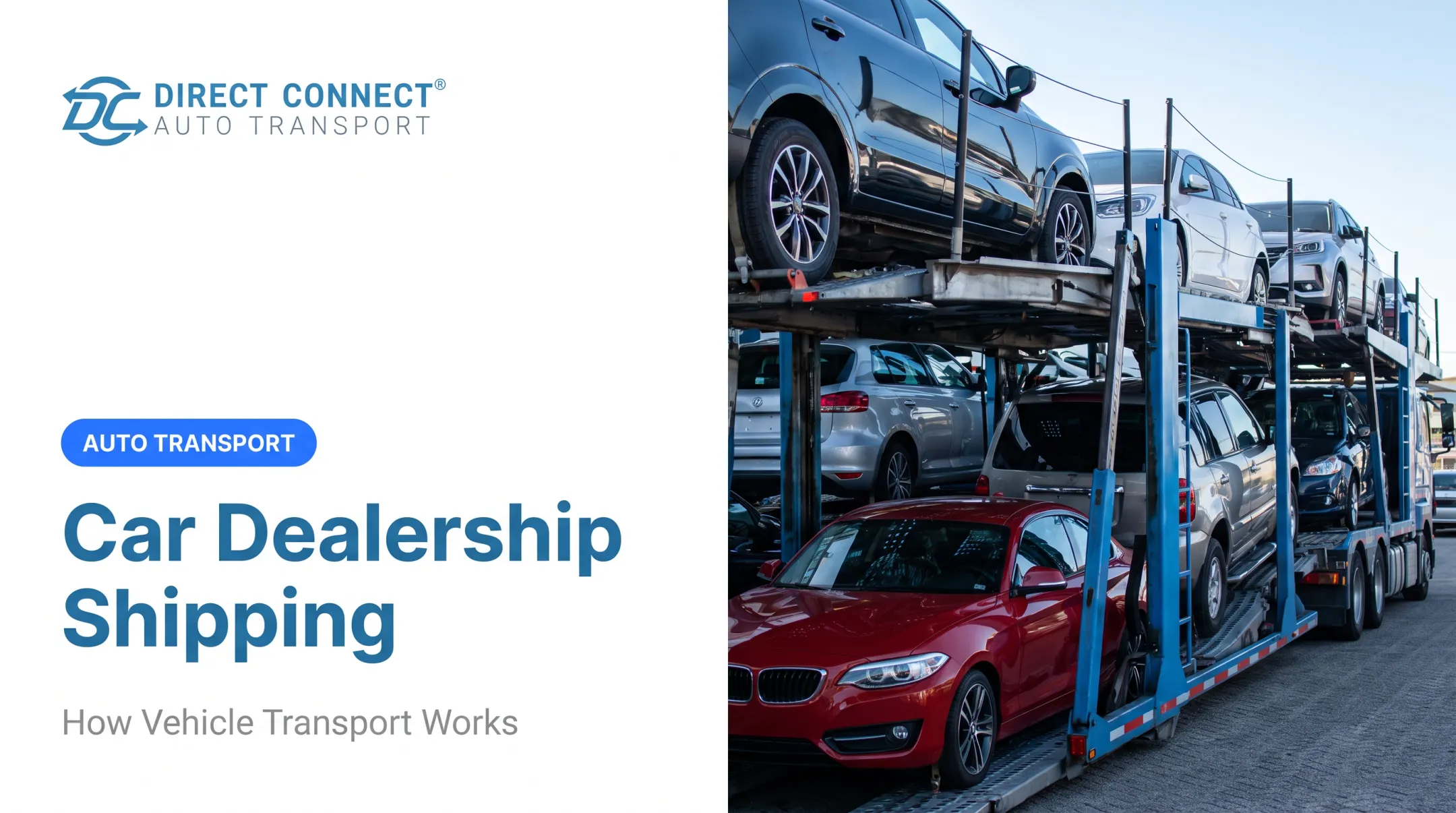
- Open transport: Standard choice for most operable vehicles (85% of Direct Connect Auto Transport shipments), with exposure to weather and road debris.
- Enclosed transport: protects pristine, classic, exotic, or low-clearance cars from storms, hail, and stone chips. Direct Connect puts the premium at 40-60% over base cost.
- Flatbed or specialty: handles oversized or oddly shaped vehicles that won't fit a standard trailer.
Door-to-door generally means the driver gets as close as legally and safely possible. Car carriers run 75 to 80 feet long, so low bridges, narrow streets, tight turns, or overhanging trees can force a handoff at a shopping center or large parking lot.
Federal rules let states set limits on these trucks, but FHWA guidance is clear that this doesn't open every local road. Terminal delivery is another option and may cost extra.

How Does Road-Based Vehicle Transport Work?
Road shipping moves your vehicle from pickup to delivery through coordinated steps among you, the broker or carrier, and the driver. Timing and equipment vary with route, season, vehicle type, and carrier availability.
Quote, Booking, and Preparation
A quote starts with shipment details:
- Pickup and delivery locations
- Make, model, and year
- Whether the vehicle runs
- Dimensions or modifications
- Preferred dates and transport method
Accurate details matter. A lifted truck or non-running car quoted as a standard sedan leads to price changes or carrier mismatches later. Direct Connect recommends booking 1-3 weeks ahead with a 3-5 day pickup window.
Before pickup:
- Confirm the price and service terms in writing.
- Remove personal items. Carrier insurance generally doesn't cover them.
- Check tire pressure and look for leaks.
- Leave about a quarter tank of fuel.
- Disable the alarm.
- Photograph the whole vehicle, noting existing damage.
Pickup and Transit
The driver typically calls 12-24 hours ahead, then inspects the vehicle with you and records existing damage on the bill of lading. Drivers load the vehicle with straps, ramps, winches, or liftgates as needed.
In transit, the driver follows a planned route and may pick up or drop off other vehicles along the way. Federal hours-of-service rules cap driving at 11 hours per shift, so transit times are estimates, not a nonstop drive. Direct Connect estimates 7-14 days coast to coast and 3-10 days for shorter trips.

Brokers, Carriers, and Communication
A carrier owns or operates the trucks and moves the vehicle. A broker arranges the shipment and matches you with a carrier. Some companies, including Direct Connect, operate as both.
Verify before you pay:
- Look up the company's MC or USDOT number in FMCSA's SAFER system.
- Brokers must hold a $75,000 surety bond. That is not per-vehicle cargo coverage.
- Ask for the carrier's insurance terms and the service terms in writing.
- Compare phone numbers with those listed in FMCSA records.
Good providers keep you updated on pickup, estimated arrival, and weather or traffic delays. Direct Connect, for example, offers online quotes, tracking, and carrier coordination. If plans change, tell the dispatcher early.
Delivery and Inspection
At delivery, the driver unloads the car. You compare its condition with the pickup record, check for new damage or missing items, and note any discrepancy on the paperwork before signing. Confirm keys and accessories are returned.
The completed bill of lading anchors any claim. Under federal rules, a formal claim needs a written statement with a specific dollar amount; damage notes alone aren't enough. Coverage, exclusions, and claim procedures vary by carrier, so review them before booking.
Where Is Road-Based Vehicle Transport Used?
Common Use Cases
- Interstate household moves
- Snowbird and second-home transport
- Online vehicle purchases (Cox found 8% of used-car buyers completed their purchase fully online)
- Dealership and auction transfers
- Corporate employee relocations
- Rental and fleet repositioning
- Inland legs to an export port
Operating Environments
Carriers pick up and deliver on residential streets and at dealerships, auction yards, business sites, storage lots, and ports. Rural or tight urban locations may need a meeting point on a nearby main road. Some private lots and restricted locations are off limits to carriers.

Vehicle-Specific Handling
- Standard cars: usually open transport.
- Classics and exotics: enclosed trailers.
- Motorcycles: dedicated securement, often in enclosed carriers.
- Oversized vehicles: flatbed or heavy-haul equipment.
- Non-running vehicles: need a winch or compatible loading gear. Disclose the condition upfront; Direct Connect lists winching fees of $150-$300.
Conclusion
Car shipping works as a managed chain: accurate shipment details, the right equipment, documented condition, coordinated road movement, communication in transit, and a careful delivery inspection. Skip any link and problems follow.
If you need nationwide vehicle shipping, you can request a quote from Direct Connect Auto Transport. It offers online quoting, a carrier-managed network, and shipment tracking. Equipment and timing still vary by shipment.
Frequently Asked Questions
How does road-based vehicle transport work?
You get a quote, book, and prepare the vehicle. A carrier inspects and loads it, hauls it by road with tracking, then you inspect it at delivery and complete the bill of lading.
What is the difference between a car shipping broker and a carrier?
The carrier physically transports the vehicle. A broker coordinates the shipment with a carrier network. Check authority, insurance, and service terms for either one.
Is open or enclosed transport better for my vehicle?
Open transport suits most standard operable vehicles. Enclosed adds protection for classic, exotic, luxury, low-clearance, or high-value cars.
Can I ship a car that does not run?
Often yes, if the carrier has the winch or liftgate needed. Tell the provider the exact condition before getting a quote.
What should I do before my car is picked up?
Remove personal items, disable the alarm, and prep fuel and tires. Keep keys accessible and take date-stamped photos.
How is vehicle damage documented during car shipping?
The driver and you compare the car at pickup and delivery. Any damage goes on the bill of lading; keep photos and paperwork for a claim.