Introduction
Driving a car 1,500 miles is sometimes the worst way to move it. A relocation, an out-of-state purchase, a snowbird season, a military or corporate transfer, or a long-distance sale can all leave you without the time, or the miles, to drive it yourself.
The catch is that car shipping quotes vary widely, and the cheapest one isn't always the safest. This guide covers how to estimate costs, choose between open and enclosed transport, prepare and document your vehicle, coordinate pickup and delivery, and avoid the problems that trip up first-time shippers.
Key Takeaways
- Price depends on route, vehicle, transport type, timing, and access, so get route-specific written quotes.
- Open transport suits most cars; enclosed suits classic, exotic, and high-value vehicles.
- Compare the full quote: insurance, deposits, cancellation terms, and possible fees.
- Photograph the car, clear out belongings, and inspect it against the bill of lading at delivery.
Car Shipping Options: Choose the Right Service
Open vs. Enclosed Transport
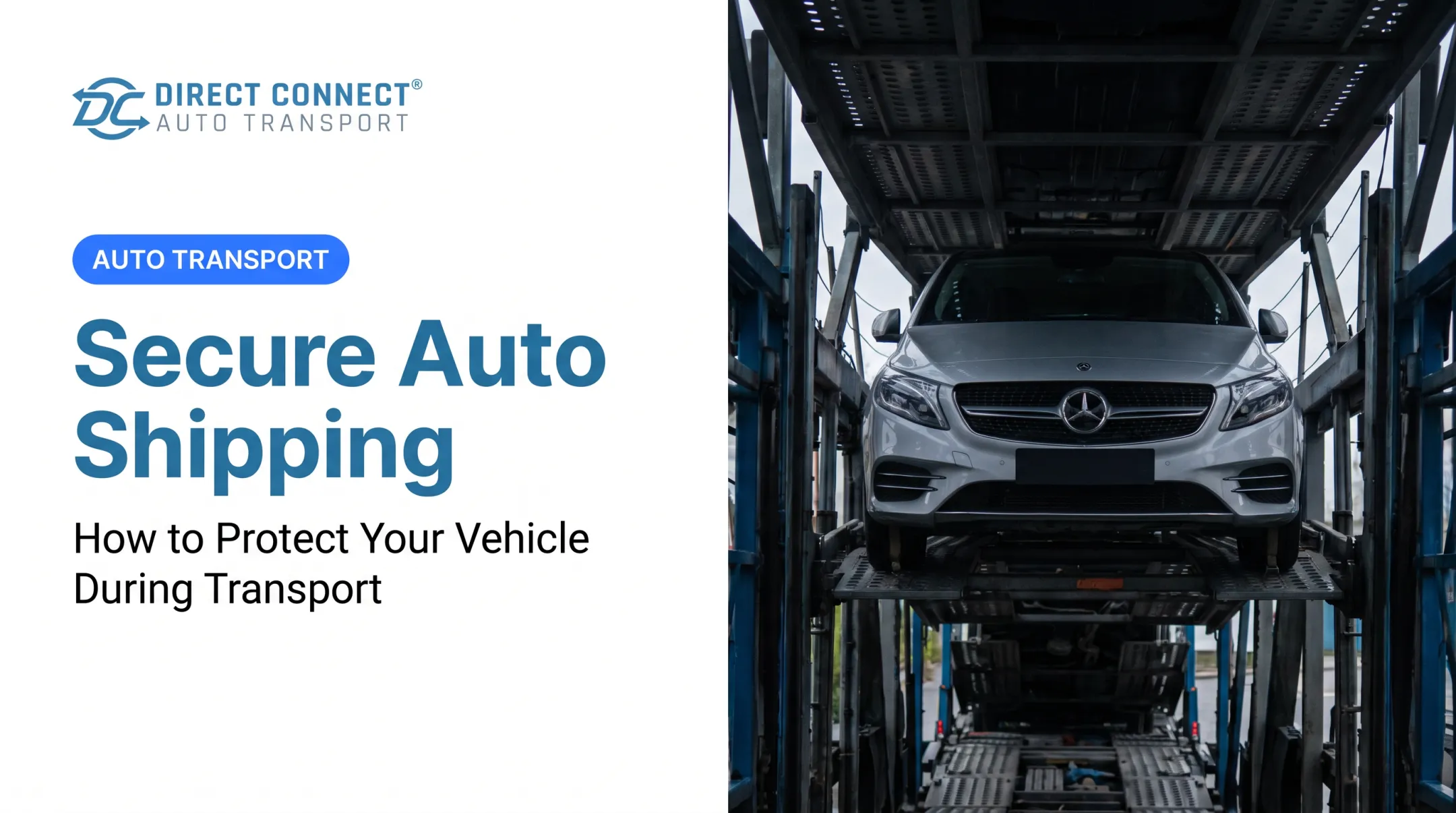
Open carriers are the economical, widely available choice for ordinary cars, SUVs, and trucks. Enclosed carriers shield the vehicle from weather, road debris, and prying eyes. Consumer Reports points to exotic, rare, and valuable classic cars as candidates for experienced high-value carriers.
Is the extra cost worth it? Pricing evidence varies by provider. One shipper, SGT, states an enclosed premium of 21.3% to 38.9% depending on distance.
Direct Connect Auto Transport cites roughly 30% to 60% in some markets. Treat these as estimates, not guarantees.

Enclosed makes sense when:
- The car is classic, collector, exotic, or recently restored
- Its value is high enough that a rock chip would hurt
- You're shipping through winter weather corridors
For a daily driver, open is usually the right call.
Door-to-Door vs. Terminal Delivery
Door-to-door is the most convenient option. Terminal or hub delivery can save money and add scheduling flexibility, though you handle the last leg yourself.
Car carriers run 75 to 80 feet long, and many streets can't take them. Consumer Reports describes one delivery that ended a mile from the specified address.
Practical tip: If your street has low clearance, tight turns, restricted parking, or overhanging branches, arrange a meeting point in a large commercial parking lot. Make sure it's legal and spacious.
Broker, Carrier, and Carrier-Managed Network
A carrier operates the trucks. A broker arranges transport through third-party carriers. The FMCSA distinguishes arranging transport from operating the vehicles that move it. Some companies, including Direct Connect Auto Transport, run a carrier-managed network with direct access to drivers.
Whichever model you choose, ask who will physically transport your vehicle and who handles communication if something changes.
How Much Does Car Shipping Cost?
What a Quote Should Include
No universal price exists. A midsize sedan on one route and a crew-cab pickup on another can differ by hundreds of dollars.
SGT's model, based on six months of finalized bookings, shows these open, door-to-door ranges (mixed-route figures, not quotes):
- Midsize sedan: $725 to $1,575
- Midsize SUV: $800 to $1,675
- Crew-cab pickup: $900 to $2,200

Ask for an itemized written quote that lists:
- Transport type and service level
- Pickup and delivery locations
- Delivery window
- Insurance information
- Deposit and payment timing
- Circumstances that could change the price
What Drives the Price
Distance and route. Longer trips cost more in total but often less per mile. Montway's 2026 estimates run about $1.85 per mile open for trips up to 500 miles, falling to $0.59 per mile beyond 1,500 miles. Rural destinations and busy seasonal corridors price differently.
Vehicle size and condition. SUVs, trucks, and oversized vehicles take more space and weight. Inoperable cars need winch loading; SGT lists a 15% premium for that, and Direct Connect lists winching fees of $150 to $300. Lowered or modified cars may need special equipment.
Timing and service level. Peak seasons raise prices. Consumer Reports notes higher rates from New England to Florida in fall and the reverse in spring. Flexible dates often cost less. Guaranteed pickup and expedited service add fees. Last-minute bookings leave you with fewer options.
Shipping vs. Driving
Compare the quote against the real cost of the drive:
- Fuel and maintenance: AAA's 2026 figures put average fuel at 17.32 cents per mile and maintenance at 11.73 cents per mile
- Tolls, lodging, and meals
- Lease mileage penalties (Toyota Financial states typically $0.15 per mile over; check your own agreement)
- Lost work time
- A flight home or a second driver
On a 2,000-mile move, the mileage cost alone is several hundred dollars before lodging and time off work.
Ways to Reduce the Total
- Compare several detailed quotes
- Book with planning time; Direct Connect recommends 1 to 3 weeks ahead
- Stay flexible on pickup dates
- Consider open transport
- Ask about terminal or nearby hub delivery
An unusually low quote deserves suspicion. Verify licensing, insurance, reviews, and the conditions under which the price can change before paying anything.
How to Choose a Car Shipping Company
Verify Authority and Insurance
Interstate auto brokers and carriers must register with FMCSA. Check both the company you hire and the carrier assigned to your car:
- Search SAFER by USDOT, MC number, or company name for safety records, inspections, and crashes
- Check the FMCSA Licensing & Insurance site for active authority
- Review complaints through FMCSA's complaint database
Know which protection is which. Brokers post $75,000 in financial security, while for-hire carriers of this size need $750,000 in public liability coverage. Neither is a per-car cargo limit. Ask for the carrier's certificate of insurance, and call your own insurer, since a personal auto policy doesn't automatically cover transport damage.
Evaluate Reputation and Communication
Read recent reviews on more than one site. Look for patterns in pickup delays, price changes, damage handling, and follow-through, not just the star rating.
Confirm the communication plan up front:
- Who sends status updates
- Whether you receive the driver's number
- Whether tracking is available
- How delays are communicated
Compare the Contract and Payment Terms
Read the agreement for vehicle details, service type, pickup windows, insurance, deposit, balance due, cancellation terms, and extra fees. Be wary of:
- Pressure to pay immediately
- Vague "all-inclusive" pricing
- Cash-only demands or personal payment accounts
- Terms that differ from the verbal quote
A BBB scam alert describes a low quote, a $50 PayPal deposit, and a car that never got picked up. BBB suggests paying by credit card.
Match the Provider to Your Vehicle
Standard cars, non-running vehicles, oversized trucks, motorcycles, and collector cars each need different equipment and experience. Before you accept a quote, disclose:
- Modifications or lowered suspension
- Roof racks and other accessories
- Mechanical problems or non-running status
- Any special handling needs
What Direct Connect Auto Transport Offers
Direct Connect Auto Transport offers:
- Open, enclosed, flatbed, and specialty transport
- Real-time tracking and instant online quotes
- A carrier-managed network with direct access to drivers
The company has operated since 2001, holds BBB accreditation, and is FMCSA-registered under MC #622283.
Verify any company's credentials yourself: current authority, coverage, service terms, and recent customer feedback.
How to Prepare Your Car for Transport
Paperwork, Keys, and Instructions
Confirm what your shipment requires: ID, registration, insurance information, and any lienholder permission. Rules vary by provider and destination. Consumer Reports advises removing the vehicle title from the car.
Provide the keys the carrier asks for, and keep a spare if you can. Leave a printed note on the dashboard about manual transmissions, alarms, disabled features, charging, or leaks.
Build a Condition Record
- Wash the exterior and tidy the interior so existing damage shows
- Photograph and video every side, roof, wheels, glass, interior, and odometer
- Date-stamp the files and save them
- Photograph the truck's plate and DOT number at loading
- Treat the driver's inspection report and bill of lading as the formal record
Remove Belongings
Take out valuables, documents, garage remotes, toll transponders, loose electronics, and anything that could shift or block the driver's view.
Policies vary. At Direct Connect, personal items aren't covered by carrier insurance and, where permitted, are limited to 100 lbs in the trunk. Get any permission and weight limit in writing first.
Check Mechanical Condition
- Look for fluid leaks
- Make sure the battery holds a charge
- Check tire pressure and brakes
- Deactivate the alarm
- Ask your carrier for its fuel level requirement; Direct Connect asks for about a quarter tank, but requirements differ
Disclose non-running status, lowered suspension, heavy modifications, or limited ground clearance before pickup so the right equipment shows up.

Prepare for Pickup and Handoff
Confirm the truck can reach your address, or arrange a legal alternative lot.
- Remove detachable accessories
- Secure what can't come off
- Confirm the pickup window
- Make sure an authorized person can inspect and release the car
Transport Tips From Booking to Delivery
Booking and Pickup
The usual sequence:
- Accept a quote and sign the agreement
- Confirm the pickup window
- Receive driver details (Direct Connect drivers typically call 12 to 24 hours ahead)
- Review the inspection with the driver
- Hand over the keys and sign the bill of lading

Dates are windows, not appointments. Weather, traffic, routing, and mechanical issues shift them. Consumer Reports described one cross-country delivery that arrived four days late. Don't book a flight or a move-in event without a backup plan.
Staying Informed in Transit
Tracking, driver calls, and written updates help you follow progress. Your car may not run straight from origin to destination, so keep a written communication trail.
Watch for these red flags:
- Unexpected payment requests mid-transit
- Last-minute changes to the delivery location
- Requests to send money to a personal account
Confirm any change with the shipping company's official contact, never by paying a personal account. Consumer Reports' reporter paid over $1,000 to a driver's personal Venmo account before key release.
Inspecting at Delivery
- Inspect in daylight if you can
- Compare the car with your pickup photos and the bill of lading
- Check the odometer and accessories
- Photograph any new damage before signing
Write discrepancies on the delivery report, then file them through the provider's claims process with photos, receipts, and communications. A damage notation alone isn't a formal claim.
Under federal claims rules, a written claim must identify the shipment, assert liability, and demand a specific dollar amount. Carriers must acknowledge it within 30 days.
If you want a transparent quote and shipment visibility, request an online quote from Direct Connect Auto Transport or call 800-980-2222.
Frequently Asked Questions
How much does it cost to ship a car?
Price depends on route, vehicle size and condition, transport method, timing, access, and delivery requirements. Get a written quote based on your specific shipment.
Is it cheaper to ship a car or drive it?
Compare the quote with fuel, tolls, lodging, meals, wear, mileage, time off work, and getting back home. Over long distances, shipping can compete once all of that is counted.
What is the cheapest way to transport a car?
Open transport, flexible dates, major-route pickup, and terminal or nearby hub delivery usually cost least. Don't pick an unverified provider just because its quote is lowest.
How long does car shipping take?
Timing varies by route, season, weather, carrier availability, access, and service level. Plan around a delivery window, not a guaranteed date.
Can I put personal items in my car during transport?
Policies, weight limits, and insurance treatment vary. Remove valuables and get written permission before loading anything.
What should I do if my car arrives damaged?
Photograph the damage and note it on the bill of lading before accepting delivery when possible. Notify the provider promptly and follow its written claims process.