This guide is for U.S. owners of classic, collector, exotic, luxury, restored, seasonal, or everyday vehicles who want a clear answer before they book. Terms like "covered transport," "enclosed auto transport," and "enclosed car shipping" get used interchangeably, but the insurance and claims details behind them are often misunderstood.
We'll walk through how the process works, what coverage actually protects, what drives cost, and how to decide whether enclosed shipping is worth it for your vehicle.
Key Takeaways
- Enclosed trailers shield vehicles from weather and road debris but don't guarantee zero damage
- High-value, rare, restored, or luxury cars benefit most; daily drivers rarely need the upgrade
- Carrier insurance, personal auto policies, and damage-free guarantees are three separate protections
- Verify the assigned carrier's USDOT authority and active cargo insurance before pickup
- Document your vehicle's condition at pickup and record new damage before signing at delivery
What Is Covered Car Transport and Why Is It Used?
Covered car transport means loading your vehicle into a hard-sided, soft-sided, or otherwise fully enclosed trailer instead of an open multi-car hauler. The exact trailer design, and how many vehicles it carries, varies by provider.
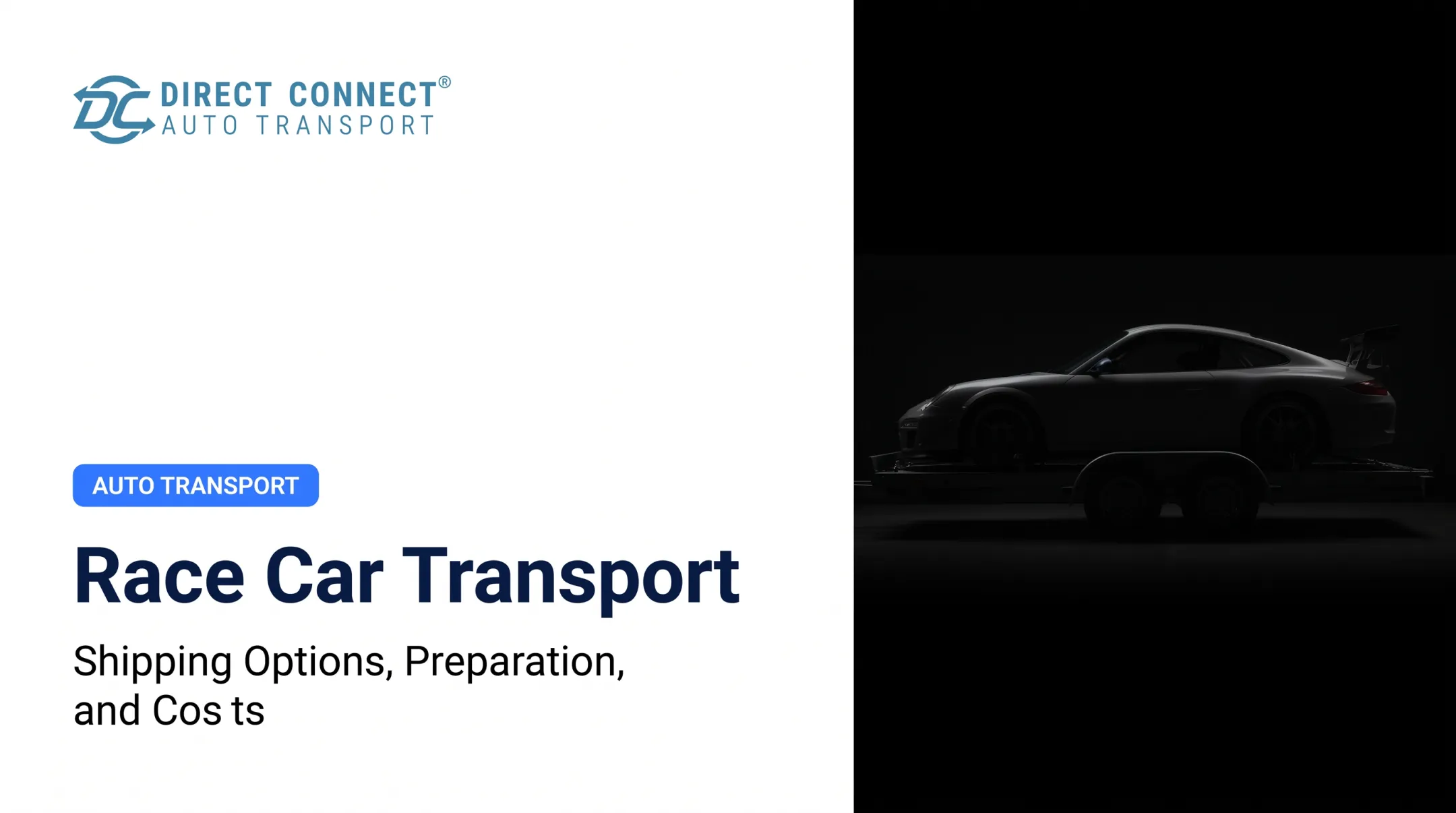
Hard-sided trailers offer the most rigid protection and are standard for show cars and six-figure exotics. Soft-sided trailers use heavy-duty fabric walls over a frame, costing less while still blocking weather and road spray.
Some providers also offer single-car enclosed trailers dedicated to one vehicle. Direct Connect Auto Transport lists these among its enclosed options for owners who prefer not to share trailer space.
Open vs. Enclosed: The Real Trade-Off
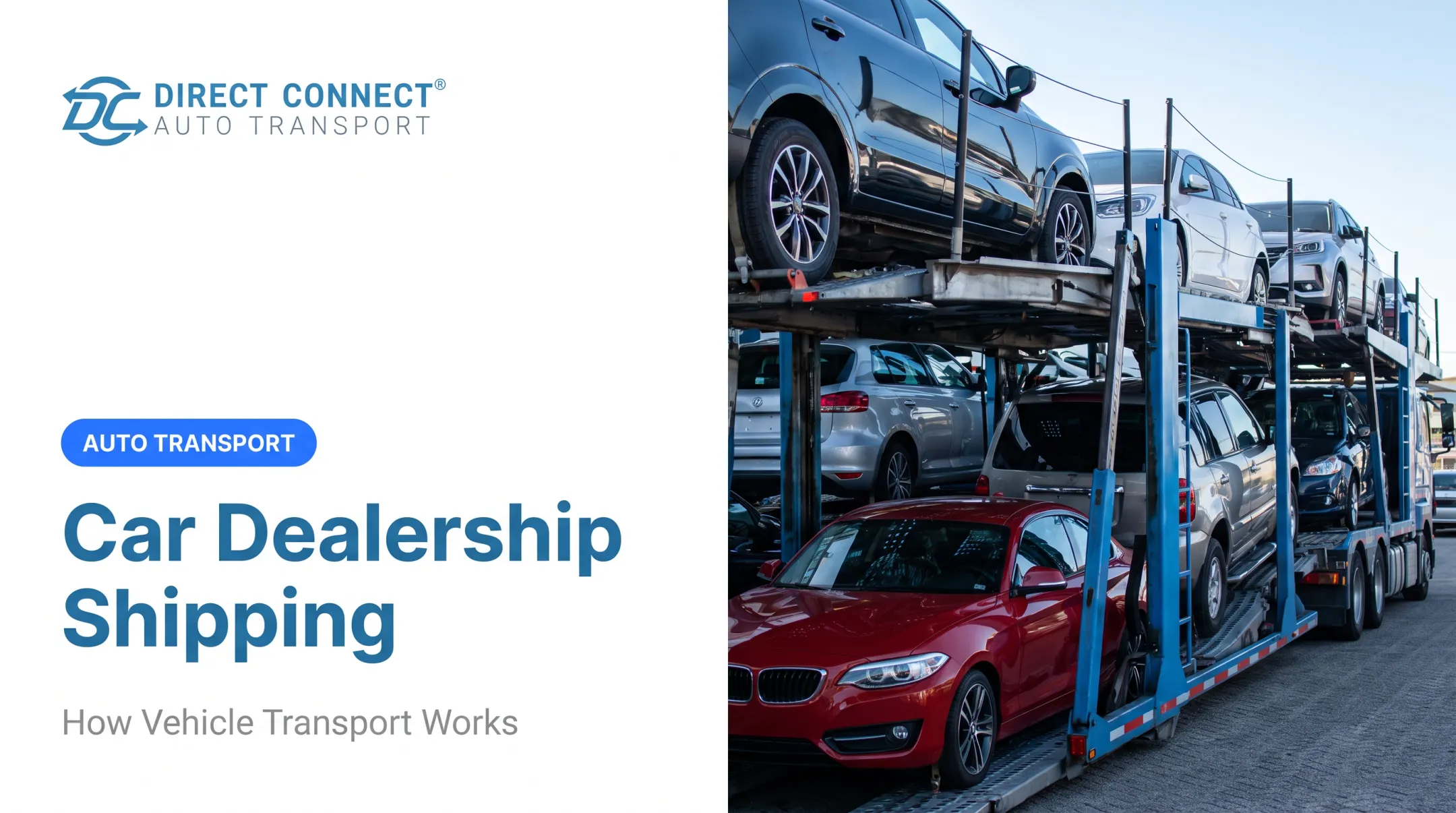
Open carriers are the industry default. They're more widely available, cost less, and move the vast majority of vehicles on the road; Direct Connect's internal figures put open transport at roughly 85 to 90 percent of shipments nationwide. The trade-off: your car rides exposed to rain, hail, sun, dust, road salt, and curious onlookers at every rest stop.
Enclosed transport closes that exposure gap. Hagerty's shipping guide recommends enclosed equipment where finish damage, windshield chips, or low ground clearance are real concerns, not as a blanket requirement for every valuable car. It's risk reduction, not a damage-free promise.
Vehicles that typically justify the extra cost:
- Classic and collector cars
- Exotic and luxury vehicles
- Recently restored or repainted cars
- Show cars and auction purchases
- Seasonal vehicles stored half the year
- High-value purchases being driven home for the first time
Making the Call
Don't choose based on the word "enclosed" alone. Weigh vehicle value, current condition, route and season, finish sensitivity, budget, and your tolerance for risk. A $15,000 daily driver heading cross-country in July has very different needs than a freshly painted 1967 Camaro heading to a concours event in February.
How Enclosed Car Shipping Works
The process runs from quote to delivery in a predictable sequence: get a quote, verify who's hauling your car, inspect and load, then inspect again at delivery.
Step 1: Request and Review the Shipment Quote
Your quote depends on several details:
- Origin and destination
- Vehicle make, model, and dimensions
- Whether it runs under its own power
- Desired pickup and delivery dates
- Trailer type (hard-sided, soft-sided, shared, or single-car)
- Door-to-door vs. terminal delivery
One distinction matters more than most buyers realize: many companies quoting enclosed shipping are brokers, who coordinate with an independent carrier rather than physically driving the truck. Ask who will actually transport your vehicle before you book.
Step 2: Verify the Carrier, Coverage, and Condition Documentation
Once a carrier is assigned, confirm their USDOT and MC numbers through the FMCSA's SAFER database. FMCSA's insurance filing rules show that non-household-goods property carriers, which includes most auto haulers, face a federal cargo-insurance minimum of $0. That's not a typo. Federal law requires liability insurance for public safety, but it doesn't force every carrier to carry cargo coverage for your specific car.
That's why it pays to ask directly:
- What's the carrier's actual cargo insurance limit per vehicle?
- What's the deductible?
- What's excluded?
- Who do you contact to file a claim?
Direct Connect requires carriers in its network to carry cargo insurance of at least $100,000 per vehicle, with additional coverage available for cars that exceed that limit, and pairs it with a damage-free guarantee covering repair costs if something goes wrong in transit.
Before the truck arrives, photograph every side of the vehicle, the wheels, the glass, the interior, the odometer, and any existing scratches. This becomes part of the bill of lading, the document recording condition at pickup.
Step 3: Load, Secure, and Monitor the Vehicle
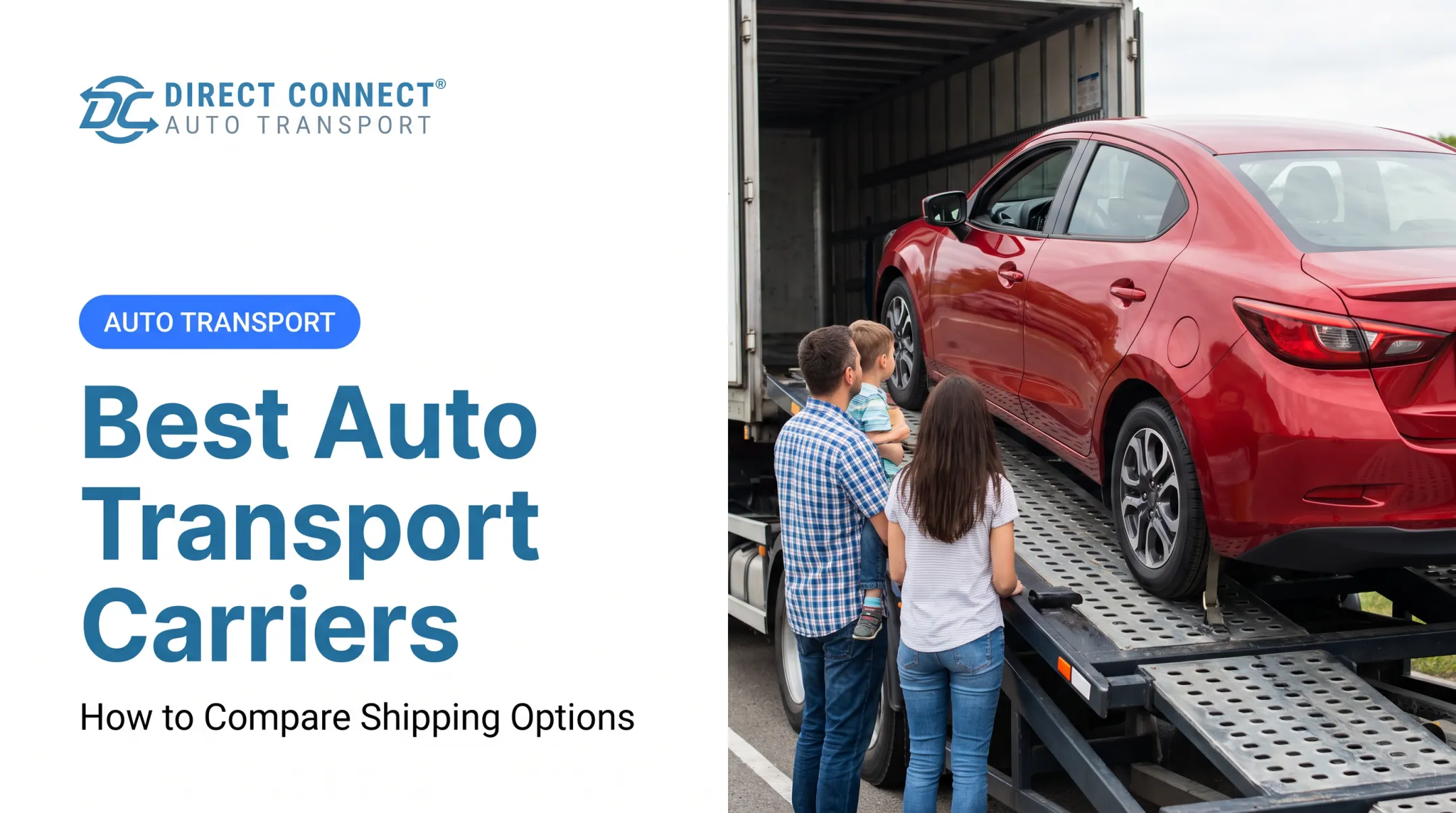
Depending on whether your car runs, it's driven or winched into the trailer, then secured with straps or tie-downs per the carrier's procedure. In a shared enclosed trailer, your car may ride alongside two to six others.
Tracking varies by provider: a tracking link, GPS pings, or direct driver contact. Direct Connect advertises real-time vehicle tracking so customers can see shipment progress, though tracking shows location, not insurance coverage. The two aren't interchangeable.
Step 4: Inspect at Delivery and Address Problems
Inspect in daylight whenever possible. Compare the vehicle against your pickup photos and the bill of lading before signing anything. If you spot new damage:
- Photograph it immediately, from multiple angles
- Note it on the bill of lading before you sign
- Notify the carrier and broker the same day
- Request their claims contact and insurance details
- Follow the policy's documented deadlines
Under federal claims regulations, simply writing "damaged" on the delivery receipt isn't enough to count as a formal claim. You need a separate written claim stating the facts and a specific dollar amount, and the carrier generally must acknowledge it within 30 days.

Where Covered Transport Is Used and What Affects It
Covered transport shows up across a wide range of situations, not just classic car sales:
- Interstate relocations involving valuable vehicles
- Snowbird moves between northern and southern homes each season
- Classic car shows, concours events, and auctions
- Dealership transfers and collector purchases
- Corporate and employee relocation packages
- The domestic leg of a vehicle headed overseas for export
Some of this is recurring, like a snowbird shipping the same car twice a year, while other shipments are one-time events tied to a sale or move. In other cases, a specific vehicle, route, or season pushes the decision toward enclosed service even for an otherwise ordinary trip.
What Drives Price and Availability
| Variable | Effect |
|---|---|
| Distance | Generally the single biggest cost driver |
| Vehicle size/weight | Larger SUVs and trucks can add $150–$300 |
| Running condition | Inoperable vehicles cost more to load |
| Season | Peak months (October–April in many regions) can add 15–25% |
| Route density | Low-traffic routes mean longer waits for a full enclosed load |
| Trailer type | Enclosed typically runs 30–60% above open transport |
Insurance terms shift the equation too. Vehicle valuation, policy limits, deductibles, exclusions for pre-existing damage or modifications, and whether personal items stay inside the car all affect your real level of protection. Ask about supplemental or gap coverage if the carrier's base policy feels thin relative to your vehicle's value.

A Practical Decision Guide
- Start with enclosed transport if your vehicle is rare, high-value, exotic, luxury, recently restored, or otherwise irreplaceable.
- Consider open transport for a standard daily driver when availability and lower cost matter more than maximum weather protection; roughly 88 percent of standard shipments on routes like Florida to Massachusetts move this way, per Direct Connect's internal data.
- Get written confirmation any time your vehicle is oversized, non-running, heavily modified, lowered, or carrying racing equipment.
Common Issues and When Covered Transport May Not Be Appropriate
The biggest misconception: enclosed transport automatically means full replacement-value insurance. It doesn't. Physical shelter, carrier cargo coverage, supplemental protection, and a provider's damage-free guarantee are four separate things, each with its own terms.
Mistakes that catch owners off guard:
- Accepting a quote without checking who the assigned carrier actually is
- Assuming a broker's bond functions as insurance on the vehicle itself
- Skipping photos at pickup, leaving no baseline for a damage dispute
- Leaving valuables or personal items inside the car, which most carrier policies exclude
- Signing a clean delivery receipt after already noticing new damage
That last one matters more than people expect. Once you sign off, disputing damage becomes much harder, regardless of what actually happened in transit.
When Open Transport Makes More Sense
Enclosed shipping isn't the right call for every situation:
- A lower-value daily driver on a well-traveled, routine route
- A flexible timeline where open transport's broader availability outweighs added protection
- A vehicle whose dimensions need a flatbed or specialty trailer instead
Compare protection, timing, and total cost together. Defaulting to "enclosed just to be safe" often means paying 30 to 60 percent more for protection your specific vehicle may not need.

Conclusion
Covered car transport puts your vehicle inside an enclosed trailer to cut down exposure to weather, road debris, and prying eyes. That protection matters most for valuable, rare, restored, and specialty vehicles. The trailer alone is not enough.
Understanding the insurance side matters just as much as the equipment. Carrier coverage, exclusions, deductibles, and the claims process all shape how protected you are. Document your vehicle's condition, verify the assigned carrier's current authority, and read the guarantee terms before signing anything.
Direct Connect Auto Transport offers enclosed shipping quotes through its nationwide carrier network, with tracking and direct communication throughout transit. Whichever company you choose, confirm the assigned carrier's active insurance terms and every condition of their guarantee before booking.
Frequently Asked Questions
How much does it cost to ship a car to Saudi Arabia?
Pricing depends on your U.S. origin, the Saudi destination port, vehicle size and value, container vs. roll-on/roll-off, and customs duties. Confirm whether the provider handles the full international move or only the U.S. domestic leg, then request an itemized quote.
How much is shipping insurance for $2,000?
Cost depends on shipment value, policy type, deductible, carrier coverage, route, and any supplemental protection. Clarify whether "$2,000" is a coverage limit, deductible, or vehicle value, then get the terms in writing.
Is insurance worth it for shipping?
Yes, especially for high-value, classic, restored, exotic, or irreplaceable vehicles where repair or replacement costs run high. Compare each policy's limits, exclusions, deductibles, and claims process rather than assuming more coverage is automatically better.
Is shipping insurance mandatory?
Carriers generally must maintain required insurance for their operations, but that doesn't automatically mean full protection for your specific vehicle. Verify the assigned carrier's active policy, applicable limits, and exclusions, and ask about supplemental coverage if needed.
What is the best enclosed car transport company?
The right provider depends on your vehicle's value, route, timing, trailer needs, and how much communication you want during transit. Compare registration status, carrier vetting, written pricing, tracking, reviews, and claims support; Direct Connect is one option worth evaluating against these criteria.