This guide is for people relocating, buying or selling a vehicle, moving a seasonal car, or shipping something special. The handoff at each end affects timing, vehicle condition, access, and communication. Get it wrong and you get missed windows, disputed damage, or a 75-foot truck stuck at the end of your street.
Below: how pickup and delivery work, what drives cost and timing, how to prepare, and when a nearby meeting point replaces your driveway.
Key Takeaways
- Carriers pick up and deliver at or near your addresses; access limits can shift the spot.
- The process runs from booking and prep through inspection, loading, transit, and signed delivery.
- Open transport suits standard cars; enclosed suits classic, exotic, or high-value vehicles.
- Route, vehicle, season, access, and flexibility set price and timing.
What Is Door-to-Door Car Shipping?
Door-to-door car shipping is an end-to-end domestic arrangement. A provider coordinates a carrier to collect your vehicle at or near the requested origin and deliver it at or near the destination. You don't drive across the country, arrange terminal transfers, or juggle several transport companies.
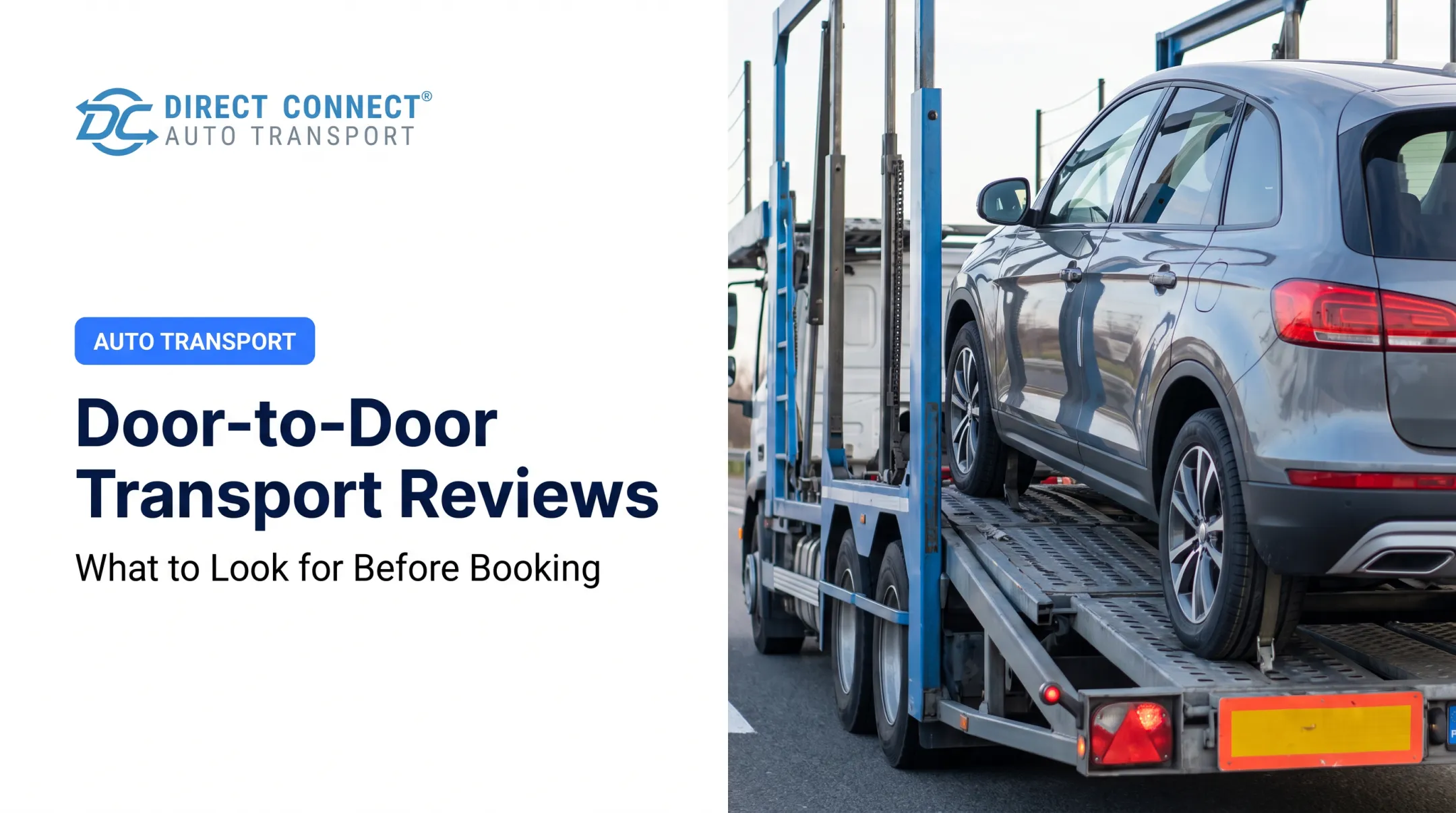
"Door-to-door" describes the planned endpoints. It is not a promise that a large auto carrier can enter every driveway, cul-de-sac, apartment complex, or gated community. Direct Connect Auto Transport notes that car carriers run 75 to 80 feet long, and low bridges, narrow streets, tight turns, wires, or overhanging trees can block access. Some cities also restrict large trucks in residential areas.
When that happens, the driver and customer agree on a nearby safe spot, such as a shopping center or large parking lot. That still counts as door-to-door service. Montway, another transport provider, describes door-to-door service the same way: as close as safely and legally possible. The FMCSA consumer advisory on automobile transporters is a standard reference for how these moves work for customers.
How it differs from other terms
- Terminal-to-terminal: you drop off and collect the vehicle at designated terminals or staging points.
- DDP (Delivered Duty Paid): an Incoterm from the ICC that allocates duties, taxes, and risk in a sales contract. It is not a name for an auto-hauler service, and it doesn't describe a standard domestic car shipment.
How Pickup and Delivery Work
The flow runs from quote and booking through preparation, pickup inspection, loading, transit, delivery coordination, and final inspection with signed paperwork.

Step 1: Request a quote and book
Quotes typically need:
- Origin and destination ZIP codes
- Vehicle year, make, and model
- Whether the vehicle runs
- Size, modifications, and any winch needs
- Preferred dates and open or enclosed transport
Then ask the questions that protect you:
- Is the quote binding, or can it change?
- Is the provider a broker or a carrier?
- What pickup and delivery windows apply?
- Which fees are included, and how do payment and cancellation work?
Direct Connect is a broker-carrier, and its quotes are free and guaranteed for 7 days.
Step 2: Prepare the vehicle
- Remove personal belongings and loose accessories. Carriers generally don't allow items inside the vehicle without approval.
- Reduce fuel to about ¼ tank.
- Disable alarms and toll tags, and secure or remove antennas, spoilers, and bike racks.
- Check for leaks. Carriers may refuse a leaking vehicle.
- Photograph every side, the wheels, and the roof. Record mileage and existing damage.
- Hand over one set of keys and keep a spare.
Keep your booking confirmation and transport instructions handy too.
Step 3: Inspect and load
The driver walks the car with you and notes dents, scratches, and chips on the Bill of Lading (BOL) or condition report. Review it before signing and keep a copy or clear photo for comparison at delivery.
Drivers load an operable car by driving it onto the carrier. A non-running vehicle needs advance disclosure, since it may require a winch, extra charges (Direct Connect cites roughly $150 to $300), or a different loading position. Drivers typically call 24 to 48 hours before pickup.
Step 4: Transit and communication
Carriers haul several vehicles on a planned route. Traffic, weather, driver hours, and other stops can all shift progress.
Know the difference between milestone updates, driver contact, and true location tracking. Ask which one your provider offers. Direct Connect manages a carrier network that lets the team reach assigned drivers quickly and offers real-time tracking. That doesn't mean every shipment rides on a company-owned truck.
Step 5: Delivery, inspection, and handoff
The driver generally calls ahead to confirm a safe meeting point and your availability. Don't assume an exact arrival time. Delivery can't happen unless you or an authorized person is present.
At delivery:
- Compare the car against your pickup condition report.
- Inspect all sides, the roof, and the undercarriage in good light. Morning or evening avoids harsh glare.
- Photograph any new damage.
- Note concerns on the delivery paperwork before you sign.
If you find damage, notify the provider promptly, keep the signed documents and photos, and follow the carrier's claim instructions. A damage note alone isn't a claim.
Federal rules at 49 CFR 370.3 require a written claim with shipment identification, an assertion of liability, and a specified or determinable dollar amount.
Where the Service Is Used and What Affects It
Common US use cases
- Interstate household relocations and employee relocation programs
- Snowbird moves, often south in fall and north in spring
- Online vehicle purchases and dealership transfers
- Auction deliveries
- Motorcycles, RVs, and specialty vehicles
Shipments can be one-time or recurring. Seasonal customers do best when planning dates and vehicle requirements early. Direct Connect suggests booking two to three weeks ahead, and earlier in busy seasons.
Open versus enclosed
- Open: Two-level carriers for about 8 to 10 vehicles; weather-exposed and usually cheapest (roughly 85% of Direct Connect shipments)
- Enclosed: Covered protection and privacy for classic, exotic, restored, or high-value cars; higher cost, with capacity from single-car units to larger trailers
Size, height, modifications, low ground clearance, and non-running condition all affect equipment and handling.
Access, timing, and cost
Steep driveways, construction zones, gated communities, apartment rules, and parking restrictions can all stop a truck. Confirm a safe nearby location before the appointment, such as a wide commercial street or accessible lot.
Timing varies. Sherpa's estimates put transit after pickup at:
- About 1 to 2 days for 500 miles or less
- 2 to 7 days for 500 to 2,000 miles
- 7 to 10 days cross-country
Pickup waiting time comes on top. A pickup date is normally a window, not a guaranteed arrival, unless your contract says otherwise.
For a sense of price, Direct Connect's worked example is a 2024 Honda Accord from Los Angeles to Austin (1,380 miles). Open transport cost $1,150 over 4 to 6 days; enclosed cost $1,600 over 5 to 7 days. Distance, rural endpoints, season, vehicle size, operability, and flexible dates all move the number.

Quote, insurance, and paperwork checks
- Confirm the total price, possible extra charges, and cancellation rules.
- Ask about cargo insurance terms, the claims process, and the personal-item policy.
- Look up the responsible carrier's authority and insurance through the FMCSA's SAFER system and Licensing & Insurance search.
- Read the written terms before relying on any guarantee.
Keep the checks separate. Broker security ($75,000) and carrier public liability ($750,000) are not vehicle cargo coverage.
Common Issues and When It May Not Be Appropriate
Misconceptions and avoidable problems
- "Door-to-door" doesn't guarantee exact driveway delivery.
- A low quote may not include every service. The BBB has warned about vehicle transport scams involving lowball quotes, deposits, missed pickups, and demands for extra payment.
- Tracking doesn't always mean continuous GPS visibility.
- Personal items stored in the vehicle need carrier approval.
Delays and disputes usually trace back to gaps like these:
- Incomplete vehicle details or undisclosed modifications
- Poor access at pickup or delivery
- Unavailable recipients or missing keys
- Undocumented pre-existing damage

When another option fits better
- Terminal-to-terminal or a staging point: Better for remote areas. Direct Connect uses Cheyenne or Casper for some rural Wyoming shipments.
- Driving it yourself: Makes sense on short trips where fuel, lodging, and time off cost less than shipping.
- Rental trailer: Works if your tow vehicle and the car are compatible.
- Flatbed or heavy-haul: Suited to oversized, unusually shaped, or hard-to-load vehicles.
- Expedited or enclosed service: Choose these for tight deadlines or very high-value cars. Expedited often speeds pickup, not necessarily delivery.
Conclusion
Door-to-door car shipping is a coordinated process: booking, preparation, documented pickup, transit updates, delivery inspection, and final handoff. The smoothest shipments rely on accurate vehicle details, realistic windows, accessible meeting points, clear paperwork, and a quote you understand.
If you want help coordinating open, enclosed, or specialty vehicle transport, request a transparent quote from Direct Connect Auto Transport at 800-980-2222. Confirm current service terms before booking.
Frequently Asked Questions
How much do freight forwarders charge?
Domestic car shipping is usually priced by the transport provider or carrier network, not a conventional international freight forwarder. Route, vehicle type, transport method, timing, operability, and access shape the quote.
What is door-to-door service in shipping?
It means pickup at or near the origin address and delivery at or near the destination under one coordinated service. Vehicle carriers may use a nearby safe meeting point.
Is door-to-door the same as DDP?
No. Door-to-door describes the physical route. DDP is a trade term covering duties, taxes, and customs responsibility, and it generally doesn't apply to a standard domestic car shipment.
How does door-to-door car shipping pickup work?
You prepare the car, and the driver arrives and inspects it with you. You both record the condition on the Bill of Lading and take photos, then the driver loads the car onto the carrier.
Does door-to-door car shipping mean delivery to my exact address?
Not always. The carrier delivers as close as safely and legally possible. Narrow roads, low clearance, gates, or restrictions may require a nearby meeting location.
What should I do when my car is picked up and delivered?
Keep your copy of the pickup report, compare the car at delivery, and photograph new damage. Note concerns on the delivery paperwork before signing, then follow the provider's claims process.