Many car owners assume driving is automatically the cheapest option, then get surprised by fuel, lodging, and wear-and-tear costs that stack up fast. Others compare open transport quotes without realizing their classic car or lifted truck might need something different entirely.
This guide compares driving, towing, open auto transport, enclosed transport, and specialty solutions like rail and air freight. You'll see where each option makes sense, what drives pricing up or down, and how to prepare your vehicle for a smooth handoff.
Key Takeaways
- Driving looks cheap upfront, but fuel, lodging, meals, and vehicle wear often total $570–$800+ on a typical cross-country trip
- Open transport covers roughly 85% of shipments and remains the practical choice for standard vehicles
- Enclosed transport adds 40–60% to the base cost but protects classic, exotic, and luxury vehicles worth $75,000 or more
- Final pricing shifts based on route, vehicle condition, season, and your pickup flexibility
- Check carrier credentials, insurance limits, and cancellation terms before booking, not just the headline price
Overview of Cross-Country Car Transport Options in the U.S.
Cross-country vehicle transport means getting your car from one side of the country to the other without personally driving the entire distance. That's the baseline. Everything else is a tradeoff between cost, convenience, and control.
Here's how the main options stack up:
- Driving it yourself: full control, zero shipping fee, but you absorb fuel, time, and mileage
- Towing behind a rental truck: moves your car and your household goods together, but requires compatible equipment and careful loading
- Open auto transport: a carrier hauls your car on an exposed multi-vehicle trailer; widely available and typically the most affordable professional option
- Enclosed transport: your car rides in a covered trailer, shielded from weather and debris, at a premium price
- Rail, air, or specialty transport: relevant only in narrow situations, such as a specific rail corridor or an urgent, high-value shipment
There's no universal winner here. A college student moving a 2015 Corolla has different priorities than someone relocating a restored 1967 Mustang. The right choice depends on what you're protecting and what you're willing to spend to protect it.
Best Ways to Transport a Car Cross-Country
Before picking a method, weigh six factors: total cost, convenience, how much driving falls on you, vehicle protection, route flexibility, and whether the option actually suits your vehicle. A lifted truck and a daily-driver sedan don't belong in the same conversation.
Drive the Car Yourself
Driving works when you want full control, have flexible time off, or honestly just enjoy a road trip. It's not automatically the cheapest option, though it's often treated that way.
Take a real example: a 2024 Honda Accord driven 1,380 miles from Los Angeles to Austin. At $4.00 per gallon and 32 mpg, gas alone runs about $173.
Add one hotel night ($120), four meals on the road ($80), and vehicle wear estimated at $200–$400, and total out-of-pocket costs land between $573 and $773, before counting two days of lost work or vacation time.

For context on ownership costs more broadly, AAA's 2026 report puts total driving costs at roughly 86 cents per mile when you factor in fuel, maintenance, and depreciation. That figure is a reminder that mileage adds up beyond gas money alone.
Non-financial costs matter too:
- Fatigue from multiple driving days
- Unpredictable weather and traffic delays
- Time away from work or family
- Extra mileage and wear that can affect resale value
Tow It Behind a Rental Truck or Tow Vehicle
If you're already renting a moving truck, towing your car behind it can save a separate shipping fee. But the equipment matters more than people expect.
Tow dolly vs. car trailer:
- A tow dolly lifts only the front wheels and works for most front-wheel-drive vehicles. Rear-wheel-drive cars typically need the driveshaft disconnected first — neutral gear isn't enough.
- A full car trailer carries all four wheels off the ground, making it the safer option for all-wheel-drive and four-wheel-drive vehicles, though compatibility still varies by rental provider.
U-Haul's tow dolly caps out at a 4,080 lb vehicle load, while its Auto Transport trailer handles up to 5,290 lb. Penske's limits differ — don't assume one brand's specs apply to another's equipment.
The rental fee is only part of the bill. Factor in:
- Fuel for the (heavier) towing combination
- Rental duration and mileage policy
- Insurance or damage coverage for both vehicles
- Your own time loading and securing the car correctly
Never exceed the tow vehicle's rated towing capacity. Check the manufacturer's rating, not just what the rental equipment claims it can handle.
Hire a Professional Open Transport Carrier
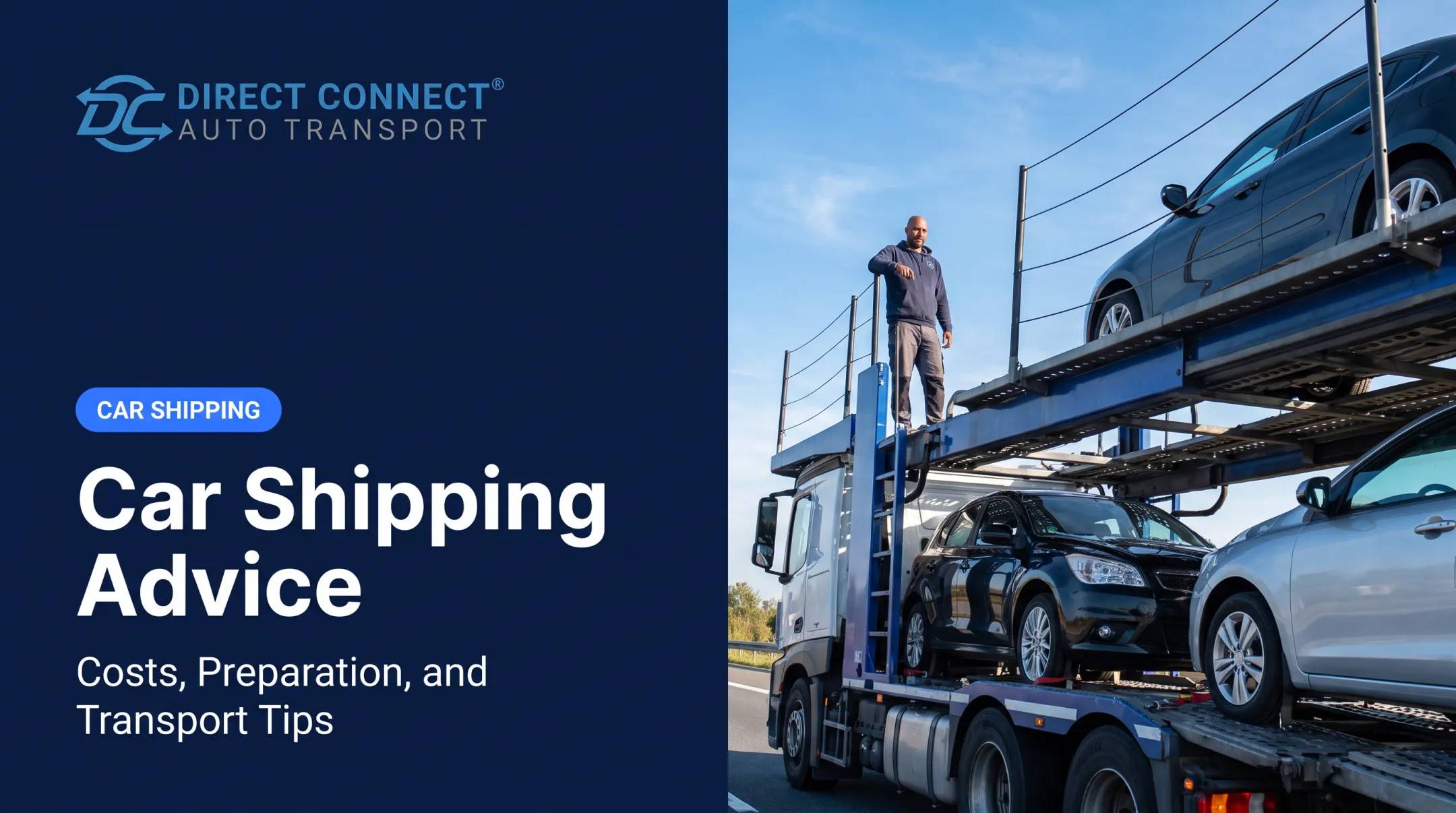
Open transport is the default professional option for a reason. It's widely available, carriers typically haul 8 to 10 vehicles at once to spread out costs, and it works for the vast majority of standard, operable vehicles.
The tradeoff is exposure. Your car rides uncovered, so it's exposed to road debris, rain, and whatever else the highway throws at it. Carriers also often make multiple stops along a shared route rather than driving point-to-point, which can extend transit time.
"Door-to-door" service is a bit of a misnomer worth understanding. A large carrier truck often can't navigate narrow residential streets or tight driveways, so your driver may ask you to meet at a nearby parking lot instead.
| Factor | Open Transport |
|---|---|
| Vehicle suitability | Sedans, SUVs, trucks, daily drivers |
| Protection level | Exposed to weather and road debris |
| Typical price position | Lower cost — roughly $500–$1,200 base range |
| Scheduling flexibility | Widely available, frequent carrier availability |
| Best for | Standard, operable vehicles on a budget |
Confirm current pricing for your specific route and vehicle rather than relying on a flat number — season, distance, and demand all move the needle.
Hire Enclosed or Specialty Transport
If you own a classic, exotic, restored, or luxury vehicle, enclosed transport is worth the premium. It shields your car from weather, road debris, and public view, and it's generally recommended for vehicles valued at $75,000 or more.
Specialty services extend beyond standard enclosed trailers:
- Flatbed transport for oversized vehicles or custom equipment that won't fit a standard carrier
- Lift-gate service for low-clearance cars that can't be driven up a standard ramp
- Non-running vehicle handling, which requires winching and advance notice
Consumer Reports' 2026 guide notes enclosed transport can cost at least 20% more than open. Internal pricing data across several routes puts the real-world premium closer to 40–60% once you factor in limited carrier capacity and specialized handling.
Direct Connect Auto Transport offers open, enclosed, and flatbed service alongside real-time tracking, which matters most when you're shipping something you can't easily replace.
Consider Rail, Air, or Water Transport Only for Specific Routes
These options sound appealing but apply to narrow situations.
Amtrak's Auto Train runs a single corridor (Lorton, Virginia, to Sanford, Florida), carrying vehicles in enclosed rail cars alongside their owners. It's not a nationwide service; it only helps if your route happens to match that line.
Air freight is reserved for urgent or extremely high-value shipments because of limited availability and premium pricing. Boat transport is primarily for offshore or international moves, not domestic coast-to-coast relocation. If your move is a standard U.S. cross-country trip, open or enclosed ground transport almost always makes more sense.
How Much Does It Cost to Transport a Car Cross-Country?
There's no single universal price here: costs vary by route, vehicle, and timing. That said, real route examples give a useful benchmark.
What Determines the Quote?
Several factors move your price up or down:
- Distance and route demand: popular corridors often have better carrier availability and pricing
- Vehicle size, weight, and operability: non-running vehicles need winching, which adds $150–$300
- Season: shipping toward Florida in fall or away from it in spring typically costs more due to demand
- Pickup and delivery accessibility: rural addresses can add $200–$400 in surcharges
- Expedited service: faster delivery windows cost extra
Ask whether your quote is binding or subject to change. A guaranteed price should stay fixed barring major changes to vehicle condition or pickup details.
Driving and Towing Cost Comparison
Build a real worksheet before assuming DIY is cheaper. Total up:
- Fuel for the full distance at current prices
- Lodging and meals for every overnight stop
- Tolls along your specific route
- Equipment rental (if towing) plus insurance coverage
- Maintenance and mileage wear on the vehicle
- Your time: two or more days off work has real value
For a 2024 Honda Accord driven 1,380 miles from Los Angeles to Austin, documented out-of-pocket costs ran $573–$773, excluding the owner's time. Shipping the same vehicle via open transport on that route runs closer to $1,150, with 4–6 days of transit. The upfront shipping cost is higher, but it comes without two lost workdays or added mileage on the car.
Open Versus Enclosed Transport Costs
Open transport costs less because carriers haul more vehicles per trip and don't need specialized covered trailers. Enclosed transport costs more because of limited capacity, added protection, and more careful handling.
Real route data illustrates the gap:
| Route Type | Open Transport | Enclosed Transport | Transit Time |
|---|---|---|---|
| Tennessee coast-to-coast | $950–$1,500 | $1,520–$2,400 | 5–8 days |
| Ohio coast-to-coast | $950–$1,450 | $1,520–$2,320 | 5–8 days |
| California to Florida | $1,400–$1,800 | $2,000–$2,500 | 7–10 days |

Enclosed isn't automatically necessary for a newer daily driver. But it's not optional for a freshly restored classic that can't risk a stone chip, either.
Ways to Reduce the Final Price
Small adjustments can meaningfully lower your quote:
- Choose flexible pickup and delivery dates instead of a fixed day
- Book 1–3 weeks ahead when possible; booking during February–July can save 15–25%
- Opt for terminal pickup over residential delivery in congested cities; this can save $100–$200
- Remove personal belongings and aftermarket accessories before pickup
- Disclose accurately whether the vehicle runs to avoid surprise winching fees
Be cautious of unusually low quotes. According to BBB's scam alert, warning signs include digital-wallet deposit requests and demands for extra payment at delivery. If a price seems too good, ask directly why it's lower than competitors.
How to Choose a Car Transport Company and Prepare for Shipment
Start by understanding who you're actually hiring. Some companies are carriers that physically move your car; others are brokers that coordinate with a network of carriers. Direct Connect Auto Transport operates as a broker-carrier, meaning it knows and manages the drivers in its network rather than outsourcing blindly.
Verify Credentials Before Booking
- Confirm the company's USDOT and MC number through FMCSA's public registry
- Check the BBB rating and read recent complaints, not just star ratings
- Ask about insurance coverage limits (federal rules don't set a minimum cargo-insurance requirement, so confirm what's actually covered)
- Review cancellation policy, deposit amount, and payment schedule in writing before signing anything
What to Compare in a Written Quote
- Total price versus deposit amount
- Guaranteed delivery window versus estimated dates
- Tracking availability during transit
- Damage claims process and documentation requirements
Preparation Checklist Before Pickup
- Wash the vehicle inside and out; dirt hides existing damage
- Photograph all sides, the dashboard, and any pre-existing dings with date stamps
- Remove valuables, electronics, and loose accessories
- Remove toll transponders like FasTrak to avoid unexpected charges
- Leave less than a quarter tank of fuel
- Check tire pressure and confirm the battery is charged
- Disclose any modifications or non-running status upfront
At both pickup and delivery, inspect the car in good lighting and note any new damage on the bill of lading before signing. Keep your photos and paperwork: they're your evidence if you need to file a claim.
Once the car is in transit, Direct Connect provides real-time tracking and direct carrier access through its network, so you know where your vehicle is at any moment rather than waiting on a callback.

Conclusion
The best way to transport a car cross-country depends on your vehicle, your route, your schedule, and how much hands-on effort you want to take on. A daily driver heading to a new job might do fine on open transport. A low-mileage classic headed to auction probably shouldn't.
Compare the full cost and service terms, not just the number on the quote. That's especially true for enclosed, oversized, non-running, or high-value vehicles, where the cheapest option on paper often isn't the cheapest option in practice.
If you're ready to see what your specific move would cost, Direct Connect Auto Transport offers free, route-specific quotes backed by nationwide coverage, real-time tracking, and a carrier network they can reach directly when questions come up.
Frequently Asked Questions
What is the cheapest way to move a car across country?
Driving or towing often has the lowest upfront cost, but once you add fuel, lodging, meals, and vehicle wear, open-carrier transport frequently comes out even or cheaper. Compare your full driving budget against a shipping quote before deciding.
How much does it cost to ship a car across the country?
Pricing varies by route, vehicle size, transport type, and timing, but coast-to-coast open transport commonly falls between $950 and $2,100, with enclosed transport running 40–60% higher. Get a current itemized quote for your exact shipment.
Is open or enclosed transport better for a cross-country move?
Open transport suits standard, operable vehicles and costs less. Enclosed transport suits classic, exotic, or luxury vehicles valued at $75,000 or more, offering protection from weather and road debris at a higher price point.
Is it cheaper to drive or ship a car cross-country?
It depends on your trip length. Short drives with no overnight stays often cost less than shipping; longer multi-day trips with lodging, meals, and lost work time frequently cost more than a professional carrier.
How far in advance should I book cross-country car transport?
Booking 1–3 weeks ahead generally improves carrier availability and pricing. Flexible pickup dates can lower costs further, though peak season or expedited requests may still affect scheduling.
What should I remove from my car before shipping it?
Remove valuables, electronics, toll transponders, and loose aftermarket accessories. Most carriers allow up to 100 lbs of personal items in the trunk, but check your carrier's policy and document the vehicle's condition with photos first.