Many fleet managers deal with fragmented coordination: separate calls to separate carriers, mismatched pickup windows, and no single record of where a vehicle actually is. Vehicle logistics solves that by combining transportation with scheduling, carrier coordination, documentation, condition tracking, and delivery confirmation, not simply arranging a truck.
This guide covers what vehicle logistics actually includes, the transportation options available to US businesses and fleets, who typically needs these services, and how to evaluate a provider before your next vehicle needs to move.
Key Takeaways
- Vehicle logistics coordinates planning, condition tracking, documentation, and communication, not just transportation
- Open, enclosed, flatbed, and specialty transport exist for different vehicle types, values, and conditions
- Centralized coordination cuts down on scattered calls and emails while improving shipment visibility
- The right setup depends on vehicle volume, destinations, timing, specs, and risk tolerance
What Does Vehicle Logistics Include?
Vehicle logistics means coordinating the full movement of a vehicle, or a group of vehicles, from pickup to delivery, including everything that happens in between. It covers more ground than hiring a driver to move a car across town.
The FMCSA's role definitions draw a clear line here: a broker arranges transportation, while a motor carrier operates the vehicle doing the hauling. Knowing which role your provider plays, or whether they manage both, matters before you sign anything.
The Activities Involved
A real vehicle logistics program typically includes:
- Shipment planning based on vehicle type, size, and destination
- Carrier assignment and scheduling around pickup windows
- Inspection records at pickup and delivery
- Transit updates while the vehicle is en route
- Delivery confirmation and issue resolution if something goes wrong
Business Fleets vs. Finished Vehicle Logistics
Business vehicle logistics usually covers employee vehicles, service trucks, rental inventory, dealership units, or specialty assets moving between locations.
Finished vehicle logistics is a different animal. It typically refers to brand-new vehicles moving through manufacturing plants, ports, compounds, and dealer networks before a customer ever sees them.
Direct Connect Auto Transport's OEM transport service, for instance, moves newly manufactured vehicles from production sites to distributors and dealerships.
Information a Provider Will Ask For
Before quoting a move, a logistics provider generally needs:
- Vehicle year, make, and model
- Whether the vehicle runs or needs special loading
- Pickup and delivery addresses
- Contact details for both ends of the move
- Required pickup and delivery dates
- Any access restrictions, like gated communities or base entry requirements
Skipping these details at the quote stage is one of the most common reasons a shipment gets delayed or re-quoted later.
Vehicle Transportation Solutions for Businesses and Fleets
Not every vehicle needs the same type of transport. Matching the method to the vehicle protects your budget and your asset.
| Transport Type | Best For | Notes |
|---|---|---|
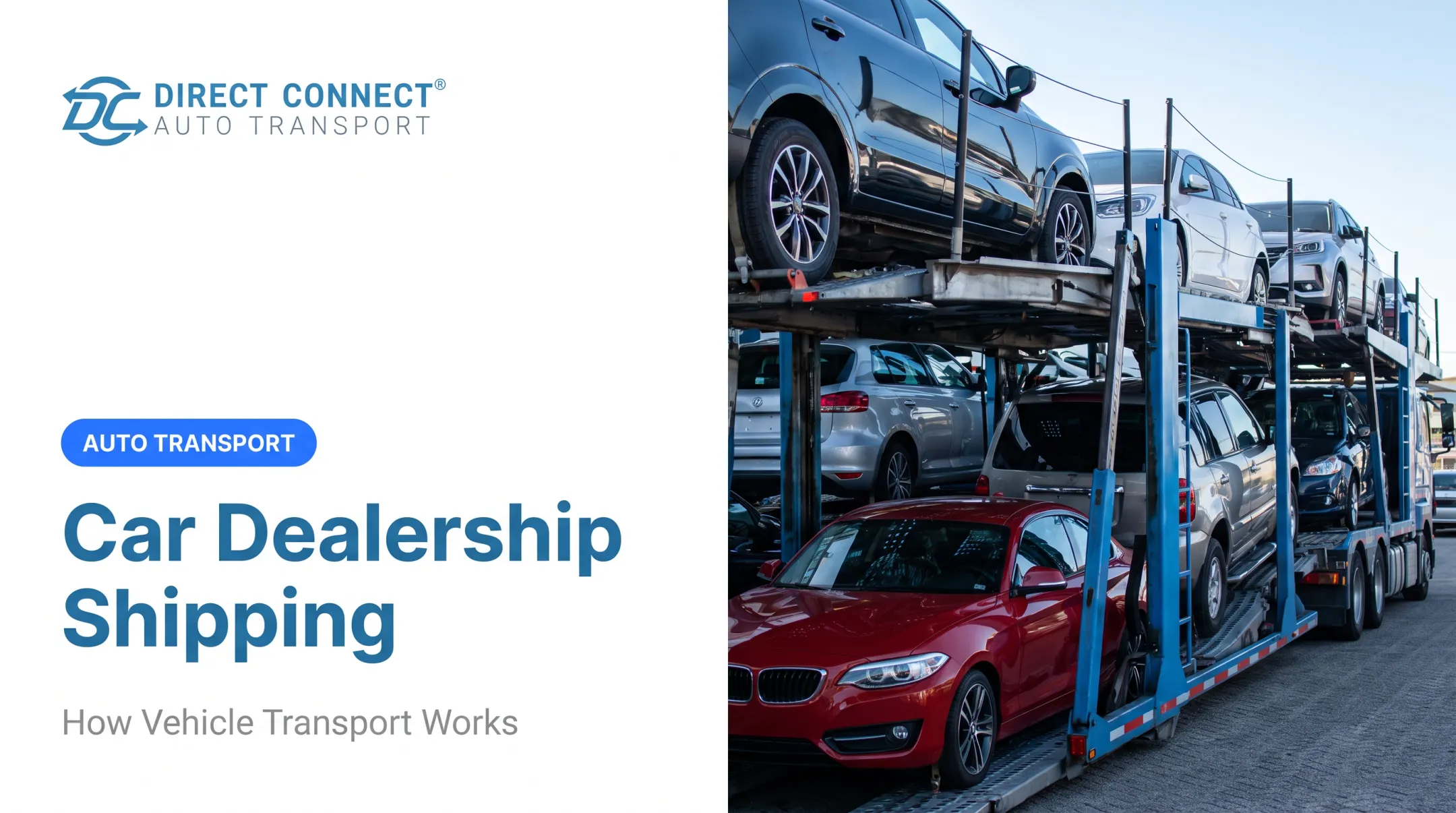
| Open carrier | Standard fleet cars, employee relocation vehicles, routine moves | Two-level carriers typically hold multiple vehicles per load; usually runs $500–$1,200 on standard routes |
| Enclosed carrier | Classic, collector, exotic, or luxury vehicles | Hard-sided trailers shield vehicles from weather and road debris; generally costs more than open transport |
| Flatbed/specialty | Non-running vehicles, oversized trucks, RVs, trailers, equipment | Used when a vehicle can't be loaded through standard ramps |
Confirm current capacity limits and pricing factors directly with your provider. Equipment varies by carrier, and a trailer rated for eight sedans may only fit five pickups, since vehicle height and weight change what actually fits on the deck.
Multi-Vehicle and Recurring Fleet Programs
Companies moving several vehicles at once, or on a recurring basis, benefit from consolidating those moves under one program instead of booking each shipment separately. A structured program lets a business:
- Set delivery priorities across multiple destinations
- Establish one point of contact instead of several
- Track all vehicles under a single shipment record
Direct Connect Auto Transport's scalable services handle both single-vehicle shipments and larger corporate fleet programs through the same process.
Employee Relocations and New-Hire Moves
When a company transfers an employee or onboards a new hire in another state, vehicle shipping removes the need for that person to drive their car hundreds or thousands of miles.
Folding vehicle transport into a broader relocation package keeps the move organized and gives HR a single vendor to coordinate with, rather than leaving employees to arrange their own shipment.
Domestic Port-Leg Transportation
Some vehicles are ultimately headed overseas. In those cases, the vehicle still needs an inland US carrier to reach the departure port before ocean freight begins.
That inland leg, moving a vehicle from its origin to a port facility, is a standard domestic transport job. Ocean freight and customs processes are separate services and should be confirmed independently with the relevant provider.
Who Uses Business Vehicle Logistics Services?
A wide range of businesses rely on vehicle logistics, not just large trucking fleets.
- Fleet managers move vehicles between branches, depots, job sites, storage locations, and maintenance facilities when rotating or replacing units.
- HR and mobility teams coordinate vehicle shipping for transferred employees and new hires, managing delivery windows alongside the rest of the relocation package.
- Dealerships, rental operators, and auctions need inventory moved between locations or delivered straight to a customer's driveway.
- Manufacturers and vehicle retailers rely on transport to keep distribution networks stocked.
Specialty cases need different handling:
- Classic and exotic vehicles typically travel enclosed
- Motorcycles and RVs need their own securing equipment
- Non-running units require a carrier that can winch the vehicle on without it needing to start
Consider a regional contracting company relocating eight service trucks from a closing Texas branch to new job sites in Florida and California.
Handled separately, that's eight calls, eight invoices, and eight pickup windows managed by different site managers. Through one coordinated program, it's a single point of contact and one team monitoring all eight trucks until they arrive.

Fleet relocation at this scale means juggling vehicle availability, driver capacity, and customer commitments across locations, which is exactly the kind of coordination Fleet Management Weekly points to as a common challenge for dispersed fleets.
Benefits of a Structured Vehicle Logistics Program
Running multiple vehicle moves through separate calls, emails, and spreadsheets burns staff time before you even count transport costs. A single coordinated program consolidates that into one process and one point of contact.
Cost Predictability
Vehicle logistics pricing depends on several factors working together, not one number:
- Vehicle type and size
- Distance and route
- Transport method, open versus enclosed
- Season, with peak snowbird months typically adding to demand
- Vehicle condition, since non-running units need extra loading equipment
- Pickup and delivery window flexibility
No provider should promise the lowest price in the market. A structured program instead builds a quote from your actual shipment details. Multi-vehicle moves also tend to get more cost-efficient as volume grows, according to Auto Remarketing's coverage of 2025 transport-industry pricing trends.
Visibility and Documentation
Milestone updates and tracking let fleet managers check pickup status, transit progress, and expected delivery without calling the carrier directly. Direct Connect's tracking technology, for example, keeps customers informed on vehicle location throughout the shipment.
Documented condition at pickup and delivery, recorded against a bill of lading, gives both sides a clear record if a dispute comes up later. That record protects both parties when questions come up later.
Operational Impact
Reliable vehicle movement affects more than the freight invoice. You get less downtime for service vehicles, smoother employee relocations, and faster inventory turnover for rental and corporate fleets waiting on units.
How the Vehicle Logistics Process Works
Every vehicle move follows roughly the same five stages, whether it's one sedan or twenty service trucks.
- Plan the shipment. Define the number and type of vehicles, origin and destination, pickup and delivery windows, condition, and any special equipment needs. Assign one internal contact responsible for the move.
- Get quotes and confirm carrier details. Accurate vehicle details and flexible dates affect availability and price. Compare service scope, communication standards, and documentation practices, not just the quoted number.
- Prepare for pickup. Remove personal items (carrier insurance typically excludes them) and photograph existing condition. Verify tire pressure, battery, fuel level, keys, accessibility, and whether the vehicle runs. Direct Connect includes a joint inspection and bill of lading at pickup.
- Track the shipment in transit. Expect status updates and an estimated delivery window. Weather, mechanical issues, or site restrictions can shift timing, and a good provider flags these changes rather than leaving you to guess.
- Complete delivery. Inspect the vehicle against the pickup record before signing anything. Resolve visible discrepancies immediately, then update your fleet or asset records to reflect the new location.

Before Your First Vehicle Moves
Set three things up before the first shipment goes out:
- Assign one internal owner for vehicle logistics decisions
- Keep a shipment record for each vehicle, including photos and the bill of lading
- Define a clear escalation process for delays or damage disputes
Skipping this groundwork is usually what turns a minor delay into a bigger headache later.
How to Choose a Vehicle Logistics Provider
Picking a provider isn't just about the lowest quote. The wrong choice costs you time, money, and a damaged vehicle you have to fight to get repaired.
What to Verify Before Booking
- Relevant experience. Has this provider moved your vehicle types, at your volume, to your destinations, with your delivery windows? A general freight company isn't the same as an auto-transport specialist.
- Carrier management and insurance. Confirm operating authority, insurance documentation, inspection procedures, and claims processes. Check a provider's FMCSA registration directly rather than taking their word for it.
- Delivery guarantee coverage. Ask what happens if a vehicle arrives damaged, late, or not at all.
- Communication practices. Who do you call when a shipment is delayed? Does the provider offer tracking, milestone updates, and written quotes, or just a phone number?
- Cancellation and rescheduling terms. Confirm these before you book, not after a date changes.
Unusually low quotes deserve scrutiny too. Prices that sit far below market rate are a known red flag in this industry, often signaling a deposit scam rather than a real shipment.
Once you know what to verify, measure providers against those same criteria in practice.
Why Businesses Work With Direct Connect Auto Transport
Direct Connect Auto Transport has coordinated vehicle shipments across all 50 U.S. states and Puerto Rico since 2001. For business and fleet accounts, that means:
- Open, enclosed, flatbed, and specialty transport under one provider
- Real-time tracking on every shipment
- Online quotes built from actual vehicle and route details
- Experience with ordinary fleet vehicles, high-value units, oversized loads, and multi-vehicle moves alike
The company operates as a broker-carrier, meaning it knows its driver network directly and can reach drivers at a moment's notice when plans change.

If your team needs to move one vehicle or fifty, gather the vehicle details, pickup and delivery locations, and your timeline, then request a tailored quote from Direct Connect Auto Transport. A quote built around your actual shipment beats guessing every time.
Frequently Asked Questions
What does "vehicle logistics" mean?
Vehicle logistics is the coordinated planning, transportation, tracking, documentation, and delivery of one or more vehicles for a business, fleet, or individual customer. It covers everything from scheduling to condition records, not just the drive itself.
What vehicle transportation solutions are available for businesses?
Businesses can use open, enclosed, flatbed, and specialty transport, along with multi-vehicle programs, employee-relocation shipping, and domestic port-leg transport. The right fit depends on your vehicle type, value, and delivery requirements.
How does vehicle logistics help fleet managers?
Coordinated transportation reduces administrative work by consolidating communication under one point of contact. It also gives fleet managers visibility into pickup, transit, and delivery without chasing down individual carriers.
Can a business ship multiple vehicles at once?
Yes. Providers can coordinate multi-vehicle or recurring moves, though availability depends on carrier capacity, vehicle specifications, locations, and scheduling requirements.
Should businesses use open or enclosed vehicle transport?
Open transport works well for standard fleet vehicles and routine moves. Enclosed transport suits high-value, classic, exotic, or weather-sensitive vehicles that need extra protection.
What should a company look for in a vehicle logistics provider?
Look for relevant experience with your vehicle types and volume, verified insurance and operating authority, clear pricing, tracking, and documented inspections at pickup and delivery.