



What this Hawaii guide covers
Hawaii PCS orders create a specific set of vehicle shipping questions that don’t apply to CONUS moves. You’re sending a car across the Pacific. The government covers one POV through a Vehicle Processing Center (VPC), but the inland transport to that VPC and any second-vehicle shipping is on you. This guide covers Hawaii-specific PCS details: which mainland ports serve Hawaii, transit times, what the government does and doesn’t cover, and how Direct Connect coordinates the commercial inland transport that connects your home to the VPC system.
This is the Hawaii-specific companion to our existing 2026 PCS Season Car Shipping Timeline and PCS Military Car Shipping Guide. Read those first for the general framework; come here for Hawaii specifics.
Direct Connect Auto Transport is veteran-owned, A+ BBB rated, and has been moving vehicles for military families for over 24 years (USDOT 2823098). Get a free Hawaii OCONUS quote or call (800) 980-2222.
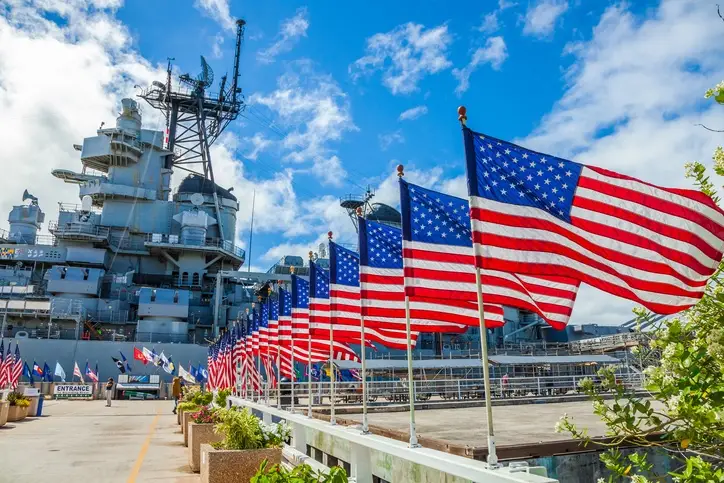
Hawaii PCS at a glance: what’s covered, what’s not
For Hawaii-bound PCS orders, the Department of Defense provides:
- Government-covered shipment of one POV through the Vehicle Processing Center system, ocean freight included
- Drop-off at a designated mainland VPC (typically West Coast)
- Pickup at a Hawaii destination terminal (typically Pearl Harbor / Honolulu area)
What the government does NOT cover for Hawaii moves:
- Inland transport from your home to the mainland VPC (your responsibility)
- Inland transport from the Hawaii arrival terminal to your final duty station address on Oahu, Maui, Kauai, or the Big Island (your responsibility)
- A second POV, even if your family has two vehicles
- Motorcycles or oversized vehicles that don’t fit standard POV definitions
That gap between “home” and “VPC” is where Direct Connect fits. We coordinate the mainland inland transport, plus any second-vehicle commercial shipping.
Hawaii installations and mainland departure ports
Hawaii hosts every branch of the U.S. military across four islands. Mainland departure ports depend on where you’re shipping from, not which Hawaii island you’re going to.
Oahu installations (the majority of Hawaii PCS volume):
– Joint Base Pearl Harbor-Hickam
– Schofield Barracks
– Marine Corps Base Hawaii (Kaneohe Bay)
– Wheeler Army Airfield
– Tripler Army Medical Center
– Camp H.M. Smith (USINDOPACOM HQ)
Big Island, Maui, and Kauai:
– Pohakuloa Training Area (Big Island)
– Pacific Missile Range Facility (Kauai)
– Maui Space Surveillance Site
Mainland departure VPCs for Hawaii-bound POVs:
– Port of Long Beach VPC serves most Southwest and West Coast service members
– Port of Oakland VPC serves Northern California and Pacific Northwest service members
– Specific VPC assignment depends on your orders, current duty station, and home of record
Your transportation office (TO) assigns the specific VPC. Don’t pick one yourself; the assignment ensures your government-funded shipment routes correctly.
How long Hawaii car shipping takes in 2026
Hawaii PCS car shipping moves slower than CONUS. Plan for the full window.
Ocean transit time (government VPC shipment):
– Mainland VPC drop-off to Hawaii pickup: typically 20 to 30 days
– Add 7 to 14 days for U.S. Customs clearance, vehicle processing, and notification at the Hawaii terminal
– Total VPC drop-off to your possession in Hawaii: roughly 30 to 45 days
Inland transport (commercial, your responsibility):
– From your CONUS home to the assigned mainland VPC: typically 3 to 8 days depending on origin
– From Hawaii arrival terminal to your final duty station address: typically 1 to 3 days
Combined total from “pickup at your home” to “vehicle in your driveway in Hawaii”: plan for 6 to 8 weeks during normal periods, 8 to 10 weeks during peak summer PCS season.
Book your VPC appointment as early as possible. During peak season (May through August), Long Beach and Oakland VPC appointments fill 60 to 90 days in advance.
Common Hawaii PCS routes (inland portion to VPC)
Direct Connect handles the inland transport from your home or current duty station to the mainland VPC. Common routes:
Camp Pendleton to Long Beach VPC
~100 miles. 1 to 2 days. $250 to $400 open transport.
Naval Base San Diego to Long Beach VPC
~120 miles. 1 to 2 days. $300 to $450 open transport.
JBSA (San Antonio) to Long Beach VPC
~1,330 miles. 5 to 7 days. $1,000 to $1,400 open transport.
Fort Hood to Long Beach VPC
~1,440 miles. 5 to 7 days. $1,000 to $1,500 open transport.
Fort Bliss to Long Beach VPC
~800 miles. 3 to 5 days. $700 to $1,050 open transport.
Naval Station Norfolk to Long Beach VPC
~2,720 miles. 6 to 9 days. $1,300 to $1,800 open transport. Some Norfolk Navy families ship Hawaii-bound POVs across country to the West Coast VPC.
Fort Bragg to Long Beach VPC
~2,650 miles. 6 to 9 days. $1,300 to $1,800 open transport.
JBLM (Tacoma) to Oakland VPC
~790 miles. 2 to 4 days. $700 to $1,000 open transport.
For pricing on a specific origin to your assigned VPC, get a free quote or compare rates at Cost to Ship a Car.
Second vehicles: when you need to ship more than one car
Many military families have two vehicles. The government covers one. If you want the second vehicle in Hawaii with you, you have three options:
Option 1: Sell the second vehicle and buy a replacement in Hawaii.
For some families, this is the cleanest answer. Hawaii vehicle prices run higher than mainland averages, but selling a second car before PCS avoids shipping costs and complexity. Reasonable choice if the second car is older or replaceable.
Option 2: Store the second vehicle in CONUS.
Vehicle storage during OCONUS tours is common, especially for shorter Hawaii rotations (2 to 3 years). Storage costs typically run $50 to $150 per month depending on location and indoor vs outdoor.
Option 3: Ship the second vehicle commercially to Hawaii.
Direct Connect coordinates commercial shipments to Hawaii via the same mainland-to-Hawaii ocean carriers the government uses. Commercial shipping costs run roughly:
– Inland transport to West Coast port: Same rates as the VPC routes above
– Ocean freight to Hawaii: Approximately $1,200 to $1,800 for a standard sedan
– Hawaii inland delivery: $200 to $400 from the Honolulu terminal to your address
Total commercial second-vehicle cost: typically $2,000 to $3,500 depending on origin and destination.
Hawaii arrival: getting your car to your duty station
Once your POV arrives at the Hawaii destination terminal (typically near Honolulu / Pearl Harbor), you have two options:
Pick it up yourself. Many service members do this. You’ll need:
– Government photo ID
– Original PCS orders
– Vehicle title or registration
– Power of attorney if someone else is picking up
Have us coordinate delivery to your duty station address. Direct Connect partners with Hawaii-based carriers who can deliver from the terminal to anywhere on Oahu, Maui, Kauai, or the Big Island. Useful when:
– You’re still in transit and won’t arrive in Hawaii before your vehicle
– You’re stationed at Pohakuloa, MCBH Kaneohe Bay, or another installation not adjacent to the Honolulu terminal
– You’re shipping to Maui, Kauai, or the Big Island, which require inter-island ocean transport from Honolulu
For inter-island delivery (Honolulu to Maui, Kauai, or Big Island), expect 5 to 10 additional days and roughly $300 to $600 in additional shipping.
Preparing your POV for the VPC
Before VPC drop-off, your vehicle needs to meet specific cleanliness and condition standards. Failure to meet these results in rejection and the need to reschedule. Standard requirements:
- Less than 1/4 tank of fuel. Most VPCs strictly enforce this for safety on the ocean transit.
- Spotless interior. Vacuum, remove all personal items, no food residue.
- Clean exterior. Especially the undercarriage. Mud or debris can result in rejection.
- No personal items in the vehicle. No boxes, no extra household goods. Some VPCs allow a limited list (spare tire, jack, owner’s manual); ask your VPC.
- Working battery, brakes, and electrical systems.
- All keys, including spare key, manuals, and remote.
For full preparation details, check PCSmyPOV.com (the official site for the Global POV Contract program) for your specific VPC’s checklist.
EV battery considerations for Hawaii shipping
EVs are increasingly common in Hawaii PCS moves. New 2026 U.S. Customs requirements mandate full battery disclosure for OCONUS EV shipments. A few EV-specific points:
- Charge battery to 50 percent before VPC drop-off (some VPCs may require lower; confirm with your VPC)
- Disable Sentry Mode, remote unlocking, and any features that draw power during transit
- Provide written instructions on how to put the vehicle in transport mode
- Confirm the VPC and ocean carrier handle your specific make/model (most Teslas, Lucids, Rivians are routine; specialty EVs may have specific requirements)
For commercial second-vehicle EV shipping, see our EV battery safety guide (publishing as part of this batch).
Military discounts and veteran ownership
Direct Connect offers military discounts for active duty, reserve, National Guard, and veteran customers across all branches. As a veteran-owned company, we know Hawaii OCONUS specifics:
- VPC appointment coordination. We work backward from your VPC appointment date to time inland pickup correctly.
- PPM documentation for the inland portion of your move.
- Receiving-side coordination when you return from Hawaii to a CONUS duty station.
- Multi-vehicle Hawaii moves where the government covers the first POV and we coordinate the second.
Mention your service status when you request a quote, and the military discount applies automatically.
Frequently asked questions about Hawaii OCONUS car shipping
Does the military pay for car shipping to Hawaii?
Yes, for one POV per service member or household. The government covers ocean freight from a mainland VPC to a Hawaii destination terminal. Inland transport from your home to the mainland VPC and from the Hawaii terminal to your duty station is typically your responsibility.
How long does it take to ship a car to Hawaii?
Plan for 6 to 8 weeks total during normal periods, 8 to 10 weeks during peak PCS season (May through August). Ocean transit alone is typically 20 to 30 days, plus customs clearance and processing.
Can I ship a second vehicle to Hawaii?
Yes, but the government won’t cover it. Direct Connect coordinates commercial second-vehicle shipments to Hawaii via the same ocean carriers used for VPC shipments. Total commercial cost typically runs $2,000 to $3,500 including inland transport, ocean freight, and Hawaii delivery.
Which mainland port does my Hawaii-bound POV ship from?
Most West Coast service members ship through the Port of Long Beach VPC. Pacific Northwest and Northern California service members may ship through the Port of Oakland VPC. Your transportation office assigns the specific VPC based on your orders.
How early should I book my VPC appointment?
During peak PCS season (May through August), book VPC appointments 60 to 90 days in advance. Long Beach and Oakland VPCs fill quickly during summer. Off-peak windows allow shorter lead times, but 30 to 45 days ahead is still recommended.
Can I ship a non-running car to Hawaii?
Possibly, but the rules are strict. The VPC may reject vehicles that aren’t operable, depending on the specific issue. For commercial second-vehicle shipments, non-running vehicles can typically be shipped with additional handling fees.
What if I’m stationed on Maui, Kauai, or the Big Island?
Hawaii inter-island shipping is required. Your POV arrives at the Honolulu terminal. From there, inter-island ocean transport to Maui, Kauai, or the Big Island typically takes 5 to 10 additional days and costs $300 to $600.
How do I get a Hawaii OCONUS car shipping quote?
For the inland transport portion (your home to the mainland VPC), use our online quote form for an instant estimate. For complete commercial second-vehicle shipments to Hawaii, call (800) 980-2222 to discuss the multi-step coordination.
Get a free Hawaii OCONUS car shipping quote
Direct Connect Auto Transport has been coordinating Hawaii OCONUS car shipments for military families for over 24 years. Veteran-owned, A+ BBB rated, with real-time tracking on the inland portion and partner-network coordination for the ocean and Hawaii inland portions. Get a free quote or call (800) 980-2222.