


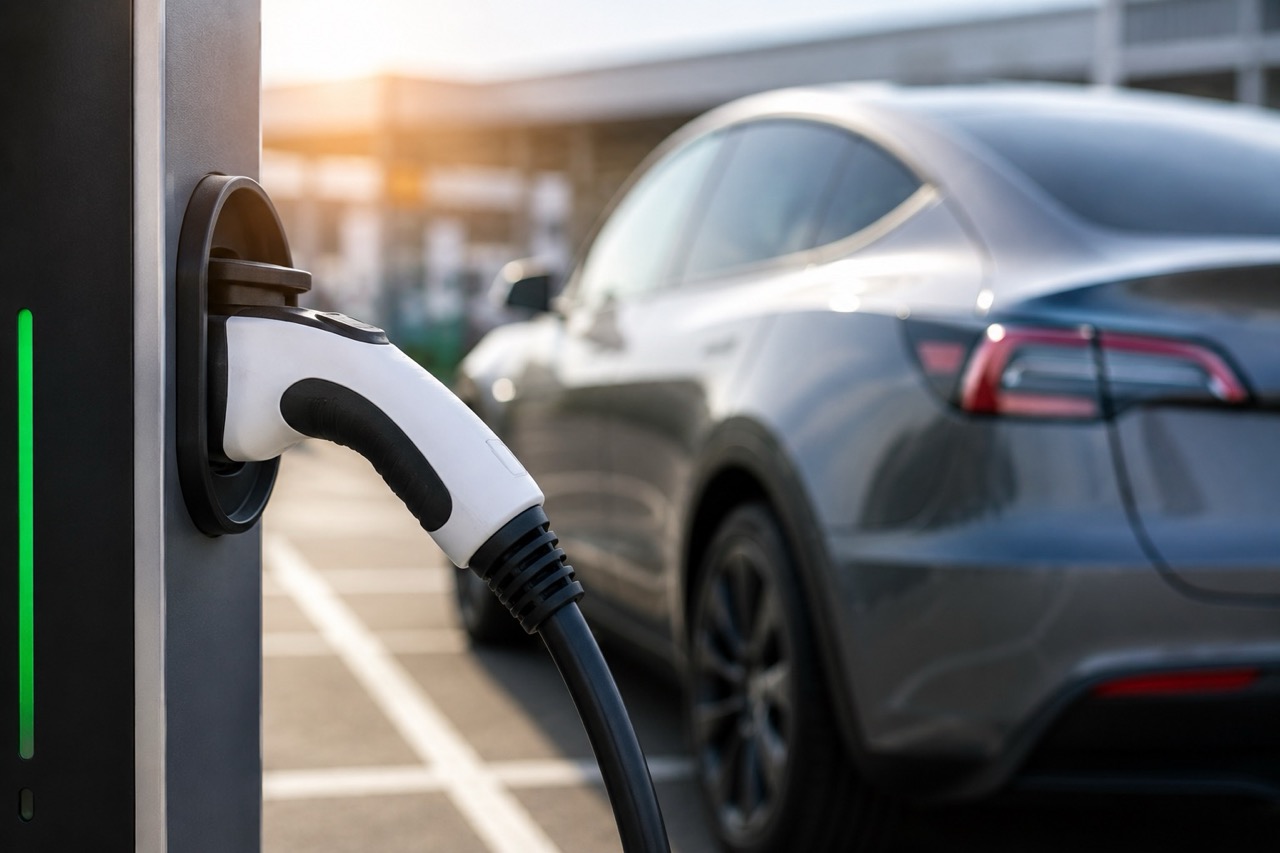
Why EV transport is different
Shipping an EV isn’t fundamentally different from shipping a gasoline vehicle, but the details matter. Battery state of charge, software settings that can drain power during transit, and carrier handling protocols for high-voltage systems all need attention before pickup. With EVs now over 12 percent of new U.S. vehicle sales in 2025 and growing into 2026, the auto transport industry has adapted, but EV owners still need to do some homework before shipping.
This guide covers EV-specific preparation for shipping in 2026: charge levels, software settings, transport mode, what to tell the carrier, and how to spot a carrier who actually knows EVs versus one who’s winging it.
Direct Connect Auto Transport handles EV shipments routinely on every major U.S. route. Veteran-owned, A+ BBB rated, USDOT 2823098. Get a free EV shipping quote or call (800) 980-2222.
EV models we ship regularly
Direct Connect handles all major EV makes and models on open and enclosed transport:
Tesla: Model 3, Model Y, Model S (including Plaid), Model X, Cybertruck
Lucid: Air (Pure, Touring, Grand Touring, Sapphire)
Rivian: R1T, R1S, R2 (as deliveries expand)
Ford: F-150 Lightning, Mustang Mach-E
Chevrolet: Bolt EV/EUV, Blazer EV, Equinox EV, Silverado EV
GMC: Hummer EV, Sierra EV
Cadillac: Lyriq, Escalade IQ
Hyundai: Ioniq 5, Ioniq 6
Kia: EV6, EV9
BMW: iX, i4, i5, i7
Mercedes-Benz: EQS, EQE, EQB
Audi: e-tron, Q4 e-tron, Q8 e-tron
Porsche: Taycan (all variants)
Polestar: 2, 3, 4
Volkswagen: ID.4, ID.7
Genesis: GV60, Electrified GV70
The basics apply to all of these. Specific software settings vary by manufacturer.
Charge level: the most important EV prep step
The single most important EV shipping prep step: charge your battery to roughly 50 percent before pickup.
Why 50 percent and not full or empty:
Too full (90%+): Lithium-ion batteries don’t tolerate sustained high charge well, especially over multi-day transport. High charge levels also increase fire risk in rare incidents.
Too low (under 20%): If transit takes longer than expected, or if the vehicle needs to be moved on/off the carrier at multiple staging points, a near-empty battery can leave the vehicle stranded without enough charge to roll into position.
50 percent is the sweet spot: Enough charge for any handling needed during transit, low enough that battery degradation isn’t a concern, and within the safe range for emergency response if needed.
Some specific carrier handling situations:
- Carriers sometimes need to start, move, and reload vehicles during multi-stop routes
- Customs and port handlers may need to move vehicles short distances
- Delivery handoff sometimes happens after hours, when a charging station isn’t accessible
50 percent gives you margin for all of those situations without battery health concerns.
Software settings for transport
Beyond charge level, EVs have software settings that need adjustment before shipping. The specifics vary by manufacturer, but the general principle: disable anything that draws power or interacts with the vehicle during transit.
Tesla preparation:
– Disable Sentry Mode (it can drain 1-2% battery per hour and trigger alarms during transit)
– Disable Remote Unlocking via the app
– Enable Transport Mode (Service menu, available on most Tesla models for vehicle moving)
– Disable Smart Summon
– Provide carrier with the key card (the physical card, not just the phone app)
Lucid Air preparation:
– Disable any remote sensors or alarm triggers
– Lucid offers a transport mode in service settings; enable it
– Disable phone-as-key features
Rivian preparation:
– Disable Driver+ features
– Enable Service Mode
– Provide carrier with the physical key fob
Ford F-150 Lightning preparation:
– Disable BlueCruise remote features
– Disable any pre-conditioning schedules
General EV principles (apply to most models):
– Disable any cellular-based remote features
– Disable scheduled charging
– Disable scheduled climate control
– Provide carrier with physical key/fob, not just app access
Write down or screenshot the specific settings you change so you can reset them after delivery.
What to tell your carrier
When you book EV shipment, communicate:
- The vehicle make, model, and year
- Battery state of charge at pickup (target 50 percent)
- How to put the vehicle in transport mode (specific steps, including unlock and shifter behavior in transport mode)
- Where the physical key/card is located (typically with the vehicle, sometimes mailed separately)
- Any software features that should remain enabled (rare, but some custom configurations matter)
- Whether the vehicle has been modified (lift kits, aftermarket wheels, etc.)
Direct Connect’s dispatch team logs EV-specific information for every shipment so the carrier arrives prepared.
Open vs enclosed transport for EVs
Most EVs ship just fine on standard open transport. The question of open vs enclosed for EVs follows the same logic as gasoline vehicles, with some EV-specific considerations:
Enclosed transport recommended for:
– High-end Tesla Model S Plaid, Cybertruck
– Lucid Air Sapphire and Grand Touring
– Porsche Taycan Turbo and Turbo S
– Mercedes-Benz EQS, BMW i7
– Hummer EV
– Any EV over $80,000
– Any EV that’s been modified, recently repainted, or with custom paint protection
Open transport works for:
– Standard Tesla Model 3, Model Y
– Standard Hyundai Ioniq 5, Kia EV6, Ford Mach-E
– Standard Chevy Bolt, VW ID.4
– Most mid-tier and family EVs
Enclosed transport adds 30 to 60 percent to the base rate. For high-end EVs, the protection justifies the cost.
Pickup and delivery: what to do at handoff
At pickup:
– Charge to 50 percent the night before
– Apply transport mode settings the morning of pickup
– Walk around the vehicle with the carrier, note any existing damage on the bill of lading
– Hand over the physical key/card
– Take photos of the vehicle from all sides for your own records
– Confirm carrier contact info for tracking
At delivery:
– Walk around the vehicle with the carrier before signing
– Note any damage that wasn’t on the original bill of lading
– Check battery level and verify it’s reasonable (allowing for any handling during transit)
– Get the key/card back
– Reset all transport mode settings to your normal preferences
Most EV shipments arrive without incident. The 5 minutes spent on careful inspection at both ends matters if any issue does come up.
OCONUS EV shipping
For overseas EV shipping (Hawaii, Alaska, Germany, etc.), 2026 brings new U.S. Customs requirements:
- Full battery disclosure is now mandatory for OCONUS EV shipments
- Specific make/model documentation required for the Vehicle Processing Center
- Some specialty EVs (newer Cybertruck variants, specialty manufacturers) may have specific OCONUS shipping requirements
For OCONUS EV shipments, the standard prep applies plus the additional customs documentation. See our Hawaii OCONUS Car Shipping Guide (this batch) for full OCONUS process details.
How to identify an EV-experienced carrier
The auto transport industry has adapted to EVs, but not every carrier has the same depth of EV experience. Signs of an EV-experienced carrier vs. one who’s improvising:
EV-experienced indicators:
– Asks about charge level, transport mode, and specific make/model settings during booking
– Provides a written EV preparation checklist
– Has insurance coverage that explicitly includes EV-specific risk
– Can describe the handling process for your specific make/model
– Carrier driver has handled the same model before
Red flags:
– Treats EV shipment as identical to gasoline vehicle shipment
– No questions about charge level or settings
– Vague answers about transport mode
– “We do EVs all the time” without specific details about your make/model
Direct Connect’s dispatch team logs EV-specific information for every shipment, and our carrier network includes EV-experienced drivers across all major U.S. routes.
Frequently asked questions about EV car shipping
Can I ship a Tesla or other EV?
Yes. EVs ship routinely on both open and enclosed transport. Direct Connect handles Tesla, Lucid, Rivian, Ford Lightning, and most other EV makes/models on every major U.S. route.
What charge level should my EV be at for pickup?
Roughly 50 percent. Too low risks the carrier needing more charge during transit; too high creates battery degradation risk and emergency response concerns.
Do I need enclosed transport for my EV?
For standard daily-driver EVs (Tesla Model 3/Y, Ford Mach-E, Hyundai Ioniq 5, etc.), open transport is fine. For high-end EVs over $80,000 (Tesla Plaid, Lucid Air Sapphire, Porsche Taycan Turbo, Mercedes EQS), enclosed transport offers better protection. The cost is 30 to 60 percent more than open.
Will my EV battery drain during transit?
Properly prepared, no. Disable Sentry Mode, remote unlocking, and scheduled features, then enable transport mode. Battery should drain less than 5 to 10 percent during a typical multi-day cross-country transit.
Can I track my EV during shipping?
Yes. Direct Connect provides tracking on every shipment. Disable your EV’s own tracking features (Tesla app tracking, etc.) during transit since they’re not needed and can interact with carrier handling.
What if my EV is custom-modified?
Modified EVs (lift kits, aftermarket wheels, custom paint protection) can ship, but communicate any modifications when booking. We discuss the specifics with the carrier to ensure appropriate handling.
Can I ship a Cybertruck?
Yes. Cybertrucks ship on standard open or enclosed transport. The specific dimensions sometimes require extra coordination at staging, so book with the model specified.
How do I get an EV car shipping quote?
Use our online quote form for an instant estimate. Specify the EV make and model when you book so we route to an EV-experienced carrier. Or call (800) 980-2222.
Get a free EV car shipping quote
Direct Connect Auto Transport handles EV shipments routinely on every major U.S. route. Veteran-owned, A+ BBB rated, with EV-experienced carrier network and clear preparation guidance. Get a free quote or call (800) 980-2222.