


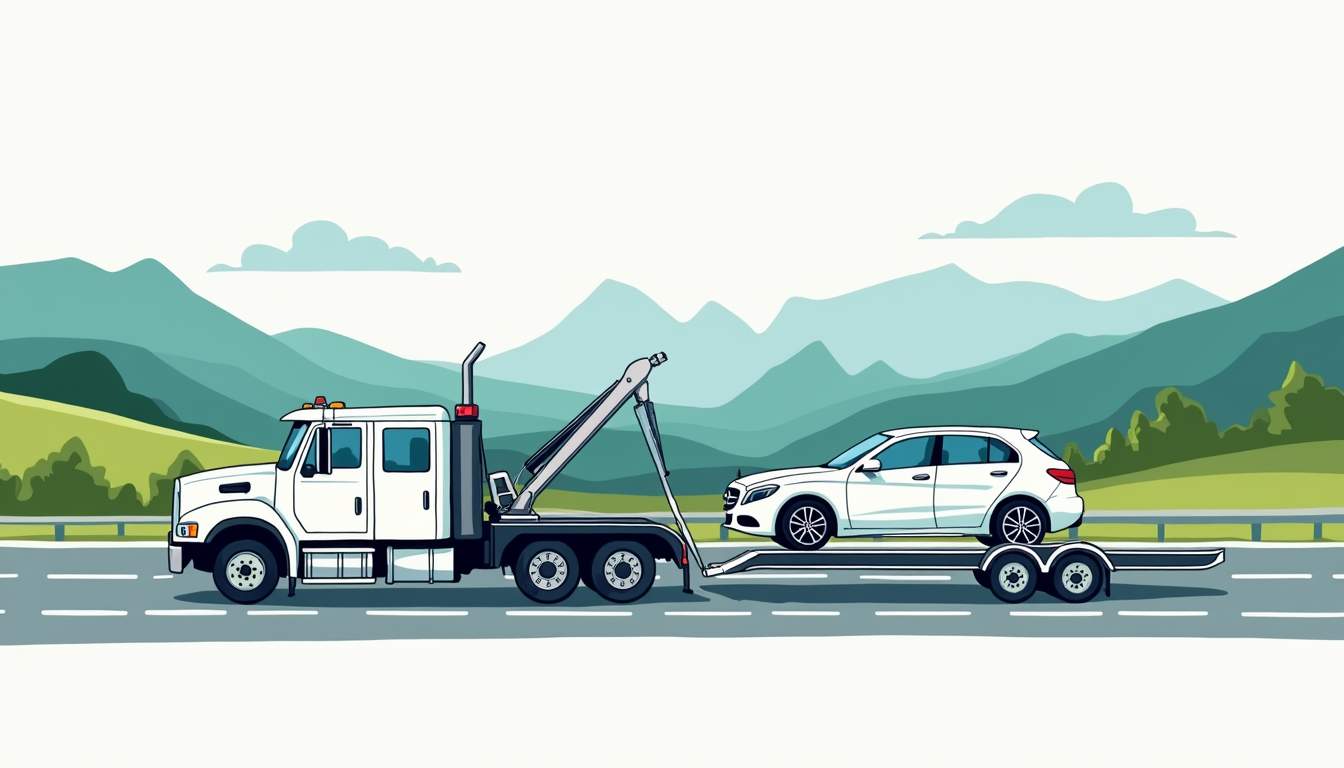
For a long-distance move, you have two real choices: tow the car yourself with a rented dolly or trailer, or hand it to a professional auto transporter. DIY towing looks cheaper on paper. A one-way tow dolly for a cross-country trip runs roughly $150 to $200, and a full car-hauling trailer runs around $400 to $450. But once you add fuel, lodging, time, and the risk to two vehicles, the gap with professional shipping often closes, and for some cars towing is the wrong call entirely.
This guide breaks down each towing method, what it actually costs in 2026, the risks worth knowing, and when shipping is the smarter move.
The Main Ways to Tow a Car
Four methods cover almost every long-distance situation. Each suits a different vehicle and comfort level.
- Tow dolly. A two-wheel trailer that lifts your car’s front wheels while the rear wheels roll on the road. It is the cheapest option and works well for front-wheel-drive cars. Rear-wheel-drive vehicles usually need the driveshaft disconnected first.
- Car hauling trailer (auto transport trailer). All four wheels ride up off the road on a flatbed-style trailer. It costs more than a dolly but is safer for long distances and protects your tires and transmission.
- Flat towing (four wheels down). The car is connected directly to a tow bar behind an RV or truck. It is popular with RVers but only works for vehicles the manufacturer approves for it.
- Flatbed towing. A tow truck carries the whole vehicle on its bed. It is the go-to for short-distance recovery or specialty vehicles, not a practical cross-country option.
What DIY Towing Really Costs
The rental is only the first line on the bill. A realistic cross-country towing budget includes:
- Equipment rental. Tow dolly roughly $150 to $200 one-way long distance; car hauling trailer roughly $400 to $450. Many rentals include unlimited miles.
- Fuel penalty. Towing kills fuel economy. The extra weight and drag mean noticeably more gas across a long trip, often the biggest hidden cost.
- Lodging and time. Towing safely means slower speeds and more stops, which can add days and hotel nights.
- A tow-capable vehicle. You need a truck or SUV rated to pull the load, plus the right hitch.
Add it all up and a “cheap” DIY tow can land close to what a professional carrier charges, without the insurance and convenience that come with shipping.
The Risks People Underestimate
Towing two vehicles down the interstate is not the same as a normal drive. The common problems:
- Trailer sway. Improper loading or high speeds can cause dangerous swaying.
- Vehicle compatibility. A tow dolly is for front-wheel-drive cars. Rear-wheel and all-wheel-drive vehicles need extra steps or are not eligible.
- Clearance damage. Low cars can scrape bumpers and body kits loading onto a dolly.
- Wear and tear. The wrong setup adds miles or stress to your car’s tires, suspension, or drivetrain.
- Insurance gaps. Rental coverage may not fully protect the towed vehicle. Read the fine print before you trust it.
When Professional Shipping Makes More Sense
Hand the job to a carrier when:
- The distance is long. Over a few hundred miles, fuel, time, and risk stack up fast.
- You drive an AWD, RWD, luxury, classic, or electric vehicle. These are poor candidates for a dolly and deserve full off-the-ground transport.
- You do not own a tow-capable vehicle. Renting both a truck and a trailer rarely beats shipping.
- Your time is worth something. Shipping frees you to fly or drive separately while a vetted carrier handles the car.
With professional transport, all four wheels ride off the ground, the carrier is licensed and insured, and a trained driver handles loading and the road. Open transport runs roughly $0.60 to $1.00 per mile and enclosed runs higher, with the per-mile rate dropping on longer routes. Compare that against your full DIY budget, not just the rental sticker. Our cost to ship a car page has current ranges.
Why Ship with Direct Connect Auto Transport
Direct Connect Auto Transport is veteran-owned, founded in 2001, and led by John Costelac with more than 24 years in the business and an A+ BBB rating. We assign vetted, licensed, insured carriers, document your vehicle’s condition at pickup and delivery, and offer a military discount for service members on the move. See the full process on our how it works page.
Skip the dolly. Get a free quote or call 800-980-2222.
Frequently Asked Questions
Is it cheaper to tow a car yourself or ship it?
The rental is cheaper, but once you add fuel, lodging, time, and a tow-capable vehicle, DIY towing often costs close to professional shipping, especially over long distances. Compare the full budget, not just the rental price.
Can I tow any car on a tow dolly?
No. A tow dolly is designed for front-wheel-drive vehicles. Rear-wheel-drive cars usually need the driveshaft disconnected, and all-wheel-drive vehicles generally should ride on a full trailer instead.
What is the safest way to tow a car long distance?
A full car hauling trailer that lifts all four wheels off the road is safer than a dolly. The safest option overall is professional auto transport, where a trained driver and insured carrier handle the trip.
Does towing damage my car?
It can, if done wrong. Trailer sway, low-clearance loading, and the wrong method for your drivetrain can cause damage. Professional transport keeps all four wheels off the ground and removes most of that risk.
Should I tow or ship an electric vehicle?
Ship it. EVs are heavy and sit low, which makes dolly towing a poor fit. A carrier with EV experience is the safer choice.