


Last Updated: October 30, 2025
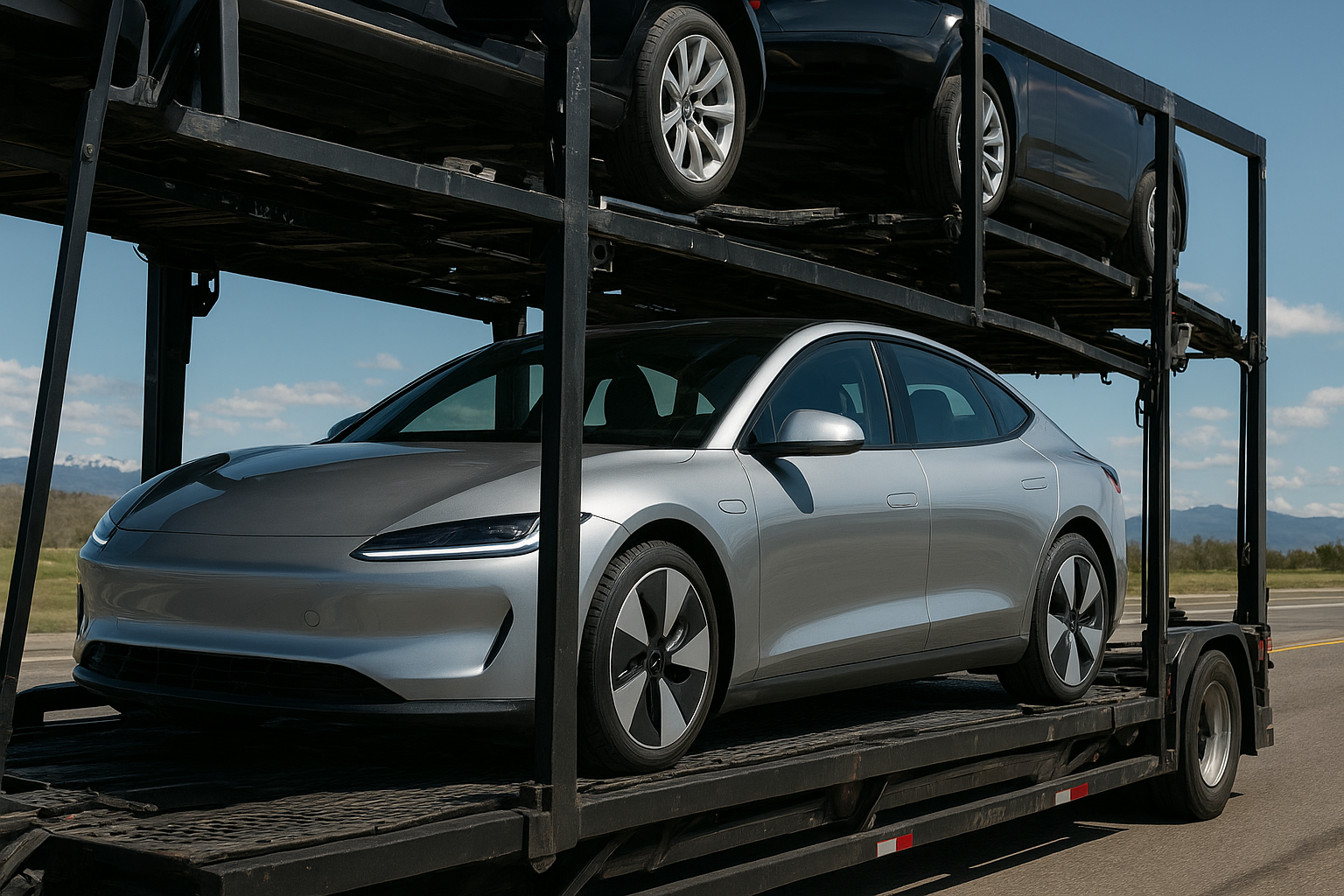
Shipping an electric vehicle is statistically 20-61 times safer than shipping a gasoline-powered car. According to data from the National Transportation Safety Board and international studies, EVs experience approximately 25 fires per 100,000 vehicles compared to 1,530 fires per 100,000 gasoline vehicles. The real question isn't whether EV shipping is safe. It's whether your carrier has the specialized knowledge to handle high-voltage lithium-ion battery systems properly.
When transported according to 2025 FMCSA guidelines with batteries charged to 30-80% capacity, electric vehicles ship safely nationwide every day. The critical factor is working with carriers who understand battery management systems, thermal runaway risks, and proper weight distribution for heavier EVs.
This guide explains the science behind battery safety, how to verify your carrier's EV expertise, optimal charge levels for transport, and why Direct Connect Auto Transport's specialized protocols ensure your electric vehicle arrives safely.
The Truth About EV Fire Risks: What the Data Shows
Electric vehicles are dramatically safer than conventional cars during transport, but they require specialized handling protocols.
EVs vs. Gasoline Cars: Fire Statistics
Research from multiple international studies confirms EVs have significantly lower fire rates:
- Swedish study (2022): EVs had a fire incidence of 0.004%, compared to 0.8% for gasoline vehicles
- US NTSB data: 1 in every 1,000 gas vehicles catches fire vs. 1 in every 83,333 EVs
- Global tracking: Fewer than 500 battery fires in passenger EVs worldwide between 2010-2024 (with 40 million EVs operating)
Why EV fires get media attention: Despite being statistically rare, EV battery fires are dramatic—they require 3,000-40,000 gallons of water to suppress (vs. 500-1,000 for gas fires), can reignite hours later, and involve new technology that creates public concern.
The reality: Modern EVs have extensive battery safety systems, making catastrophic failures extremely unlikely during proper transport.
Understanding Thermal Runaway: Battery Fire Science Simplified
Thermal runaway is a self-sustaining chemical reaction in lithium-ion batteries causing uncontrolled heating. Here's what you need to know:
How It Happens
- Trigger event damages one battery cell (mechanical impact, electrical short, manufacturing defect)
- Heat cascade causes the damaged cell to exceed safe temperature (140-212°F)
- Chemical breakdown releases oxygen and flammable gases
- Chain reaction spreads heat to neighboring cells
- Self-sustaining fire develops (battery creates its own oxygen supply)
Primary Causes During Transport
Data from the Washington State Patrol's 2025 EV Fire Study shows:
|
Cause |
Percentage |
Transport Risk |
|
Mechanical damage |
22.5% |
HIGH - Improper loading |
|
Manufacturing defects |
9.7% |
Low - Pre-existing |
|
Charging issues |
15% |
None - Not charging during transport |
|
External heat |
8% |
Moderate - Weather exposure |
Why proper transport prevents thermal runaway:
- No charging occurs (eliminates 15% of causes)
- Professional loading prevents mechanical damage
- Optimal charge levels (30-80%) maximize thermal stability
- No high-speed collisions (vehicles secured and stationary)
Bottom line: When EVs are shipped by qualified carriers following safety protocols, thermal runaway risk is negligible.
2025 FMCSA Battery Transport Guidelines: New Requirements
The Federal Motor Carrier Safety Administration introduced specific EV transport regulations in 2025 to standardize industry safety practices.
Key Requirements
Battery Inspection: Carriers must visually inspect batteries before transport for damage, swelling, or leaks. Compromised batteries cannot be shipped.
Charge Level Standards: EVs must be shipped at 30-50% battery charge (some carriers accept up to 80%). This minimizes thermal runaway risk while providing adequate power for loading/unloading.
Certified Training:
Carriers must complete training in:
- High-voltage battery safety
- Battery management system basics
- Emergency disconnect procedures
- Thermal event recognition
Required Equipment:
- Non-conductive tie-down straps (prevents electrical shorts)
- Appropriate weight capacity for heavier EVs
- Emergency response communication equipment
What this means: These regulations separate qualified EV carriers from standard auto transporters lacking proper expertise.
Optimal Battery Charge Levels for Safe Shipping
Industry consensus: Ship EVs with batteries charged between 30-80%, with 40-60% being ideal.
Why Not Fully Charged? (90-100%)
- Higher fire risk - Fully charged batteries are more thermally volatile
- Increased internal pressure - Reduces thermal stability margins
- Manufacturer recommendations - Tesla, Rivian, Lucid advise against prolonged full-charge storage
- FMCSA preference - Regulations specify 30-50% as optimal range
Why Not Depleted? (Below 20%)
- Loading requirements - Carriers need power to drive vehicle onto/off trailers
- Battery health - Extremely low charge for extended periods causes degradation
- System drain - Modern EVs draw power when "off" for security, climate, updates
Direct Connect's Recommendation
Standard domestic shipping: 40-60% charge
- Optimal safety and functionality balance
- Ensures adequate power reserves
- Maintains thermal stability
Hawaii/Alaska routes: 50-65% charge
- Accounts for longer transit times
- Covers extended port storage periods
- Ensures operational arrival
Luxury EVs (enclosed transport): 30-50% charge
- Maximum safety priority
- Meets strictest manufacturer guidelines
We verify and document battery charge at pickup on your Bill of Lading.
How to Verify Your Carrier Has Real EV Expertise
Not all auto transporters can safely handle electric vehicles.
Use this checklist:
Essential Qualifications
- Valid USDOT/MC numbers (verify at FMCSA.dot.gov)
- $100,000+ cargo insurance with battery systems explicitly covered
- Regular EV transport experience (ask: "How many EVs do you ship monthly?")
- FMCSA 2025 battery handling training completion
- References from EV owners (Tesla, Rivian, Lucid customers)
- BBB A+ rating with positive EV-specific review
Critical Questions to Ask:
"What's your battery inspection protocol?"
Look for: Specific checklist including visual damage check, charge verification, and recall status
"Does your insurance explicitly cover battery damage?"
Ensure there is: Clear confirmation of high-voltage system coverage
"Do you use non-conductive tie-downs?"
Make sure they provide: Yes—shows understanding of electrical short-circuit risks
"What's your emergency procedure for thermal events?"
Seek: Detailed response plan with driver training confirmation
Red Flags
- Pricing significantly below market rate
- Can't explain battery safety procedures
- Treats EV shipping identically to gas cars
- Doesn't ask about your battery charge level
- Can't provide EV customer references
- No weight-based pricing adjustment (EVs weigh 900-1,500 lbs more)
EV Shipping Costs: What to Expect in 2025
Electric vehicles cost $100-300 more to ship than comparable gas cars due to increased weight and specialized handling.
|
Distance |
Open Transport |
Enclosed Transport |
|
Under 500 miles |
$700-$900 |
$1,000-$1,300 |
|
500-1,000 miles |
$800-$1,100 |
$1,200-$1,600 |
|
1,000-2,000 miles |
$1,000-$1,600 |
$1,500-$2,200 |
|
Cross-country (2,000+ miles) |
$1,300-$2,500 |
$2,000-$3,500 |
|
Hawaii |
$1,600-$2,200 |
$2,300-$3,000 |
|
Alaska |
$2,100-$3,200 |
$3,000-$4,200 |
Why EVs Cost More
Weight: Tesla Model 3 = 4,048 lbs vs. BMW 330i = 3,582 lbs (+466 lbs)
Heavy EVs: Ford F-150 Lightning = 6,500 lbs (+1,500 lbs vs. gas F-150), Rivian R1T = 7,148 lbs
Additional factors:
- Battery inspection protocols
- Specialized equipment (non-conductive straps, hydraulic lifts)
- Enhanced insurance coverage
- Trained driver requirements
When to Choose Enclosed Transport
Definitely enclosed if:
- Vehicle value exceeds $80,000
- Luxury EVs (Tesla Model S Plaid, Lucid Air Sapphire, Porsche Taycan)
- Extreme weather routes (Southwest summer heat, Alaska winter)
- Cross-country distances (2,000+ miles)
Open transport works fine for:
- Standard EVs (Model 3/Y, Bolt, Ioniq 5, ID.4)
- Moderate distances and weather
- Budget-conscious shipping
Preparing Your EV for Safe Shipping
1-2 Weeks Before
- Request quotes from EV-qualified carriers
- Check NHTSA.gov for battery-related recalls
- Review insurance coverage (verify battery systems covered)
- Verify carrier has $100,000+ insurance with battery coverage
2-3 Days Before
- Adjust battery to 40-60% charge (or carrier's specified range)
- Disable all smart features:
-
- Turn off Sentry Mode (Tesla), Guard Mode (Rivian)
- Disable automatic software updates
- Turn off scheduled climate preconditioning
- Document condition thoroughly:
-
- 15-20 photos from all angles
- Video walk-around
- Photograph dashboard showing mileage and battery % ☐ Remove personal items and loose accessories
Pickup Day
- Verify battery charge with driver (document on Bill of Lading)
- Complete thorough inspection together
- Provide two sets of keys
- Share critical info: "Battery at X%, no recalls, weighs X lbs, ground clearance X inches"
- Review and sign the Bill of Lading carefully
Brand-Specific Quick Reference
Tesla: Disable Sentry Mode completely (drains battery to 0% in 7 days). Model S/X require hydraulic lifts (4.5" ground clearance). Cybertruck = 6,600+ lbs.
Rivian: Extremely heavy (7,148 lbs R1T, 7,146 lbs R1S). Disable Gear Guard. 217" long—verify trailer compatibility.
Lucid Air: Ultra-low clearance (4.5"). High value ($70,000-$249,000). Hydraulic lift mandatory.
Ford F-150 Lightning: 6,500 lbs. Secure frunk (contains charging cable). Normal 8.4" clearance.
Porsche Taycan: Luxury sports car. Enclosed recommended. Low clearance (4.7"). High value ($90,000-$187,000).
Hawaii and Alaska Shipping Notes
Hawaii:
- Ocean transit: 7-14 days
- Battery charge: 50-65% (accounts for port storage)
- Electronic POV release forms required (2025)
- Total timeline: 14-21 days door-to-door
- Cost: $1,600-$2,200 open


Alaska:
- Route: Canadian ALCAN Highway
- Battery charge: 50-65% (cold weather impact)
- Winter shipping: Enclosed climate-controlled strongly recommended
- Total timeline: 10-16 days
- Cost: $2,100-$3,200 open, $3,000-$4,200 enclosed
Frequently Asked Questions
Is it safe to ship an electric car?
Yes. Electric vehicles are 20-61 times safer than gasoline vehicles during transport. EVs experience 25 fires per 100,000 vehicles vs. 1,530 per 100,000 gas cars. When shipped by carriers following 2025 FMCSA guidelines with batteries at 30-80% charge, EV transport is exceptionally safe. The key is working with carriers who have genuine EV expertise, not just general auto transport experience.
What battery charge is safest for shipping?
30-80% battery charge, with 40-60% being optimal for most EVs. This range minimizes thermal runaway risk while maintaining power for loading/unloading. Avoid fully charged (90-100%) batteries—they're more thermally volatile. Avoid depleted batteries (below 20%)—insufficient power for carrier operations and may cause battery degradation during multi-day transport.
How much does EV shipping cost?
EVs cost $100-300 more than gas cars due to weight and specialized handling. Short distances (under 500 miles): $700-$900 open, $1,000-$1,300 enclosed. Cross-country: $1,300-$2,500 open, $2,000-$3,500 enclosed. Heavy EVs (Rivian R1T, Cybertruck, F-150 Lightning) may cost more due to weight exceeding 6,500 lbs.
What is thermal runaway?
Thermal runaway is a self-sustaining chemical reaction in lithium-ion batteries causing uncontrolled heating. It occurs when a damaged cell overheats, triggering neighboring cells to fail in a chain reaction. However, it's extremely rare during proper transport—EVs are 20-61x less likely to catch fire than gas cars. When shipped at optimal charge levels (30-80%) by qualified carriers, thermal runaway risk is negligible.
Can all carriers safely transport EVs?
No. Standard car shipping experience doesn't equal EV competence. Many carriers lack battery safety training, non-conductive equipment, battery-specific insurance, and knowledge of brand requirements (Tesla Sentry Mode, Rivian weight, Lucid clearance). Always verify: FMCSA 2025 battery training completion, documented EV experience (20+ monthly), battery-explicit insurance coverage, positive EV owner reviews.
Should I use enclosed transport for my EV?
Use enclosed if: Vehicle value exceeds $80,000, luxury EVs (Model S Plaid, Lucid Air, Taycan), extreme weather routes, cross-country distances (2,000+ miles), or you want maximum protection.
Open transport works for: Standard EVs (Model 3/Y, Bolt, Ioniq 5), moderate distances, reasonable weather, budget-conscious shipping. Open transport handles 95% of nationwide vehicle shipments safely and costs 40-50% less than enclosed.
Why Choose Direct Connect Auto Transport for Your EV
Direct Connect Auto Transport has specialized in electric vehicle shipping for over 20 years—since the original Tesla Roadster era. We've safely transported thousands of EVs across all 50 states.
What Sets Us Apart
- 20+ years EV transport experience (pre-dating mainstream EV adoption)
- All drivers complete comprehensive EV handling training exceeding 2025 FMCSA requirements
- $250,000 cargo insurance (2.5x industry standard) with battery-explicit coverage
- Non-conductive tie-downs and hydraulic lift gates for low-clearance models
- Heavy-duty trailers rated for 7,000+ lbs (Rivian, Cybertruck, F-150 Lightning)
- 99.7% damage-free delivery rate for electric vehicles
- BBB A+ accreditation with zero unresolved complaints
Our EV-Specific Protocols
Battery Management:
- Pre-shipment charge verification (documented on BOL)
- Optimal charge recommendations based on distance
- Smart feature disable assistance (Sentry Mode, Guard Mode)
- Post-delivery charging support (nearby fast charger locations)
Brand Expertise:
- Tesla: All models including Cybertruck
- Rivian: R1T and R1S weight/dimension specialists
- Lucid: Low-clearance hydraulic lift protocols
- Ford Lightning: Frunk security verification
- All major EV brands: Porsche, Hyundai, Kia, Chevrolet, etc.
Insurance Excellence:
- Battery and electrical system damage explicitly covered
- No deductible on claims under $5,000
- 48-hour claim response guarantee
- Full coverage during entire transport (including loading/unloading)
Get Your Free EV Shipping Quote Today
Don't trust your $50,000-$150,000 electric vehicle to carriers treating EV shipping like standard car transport. Battery safety protocols, optimal charge levels, proper equipment, and comprehensive insurance aren't optional—they're essential.
Direct Connect Auto Transport: Two decades of EV shipping expertise you can trust.
- Nationwide shipping to all 50 states (including Hawaii and Alaska)
- Open and enclosed transport options
- Military discounts honored
- Free expert EV shipping consultation
- 24/7 customer support
BBB A+ Accredited | USDOT Licensed | $250,000 Insurance | 20+ Years EV Expertise