


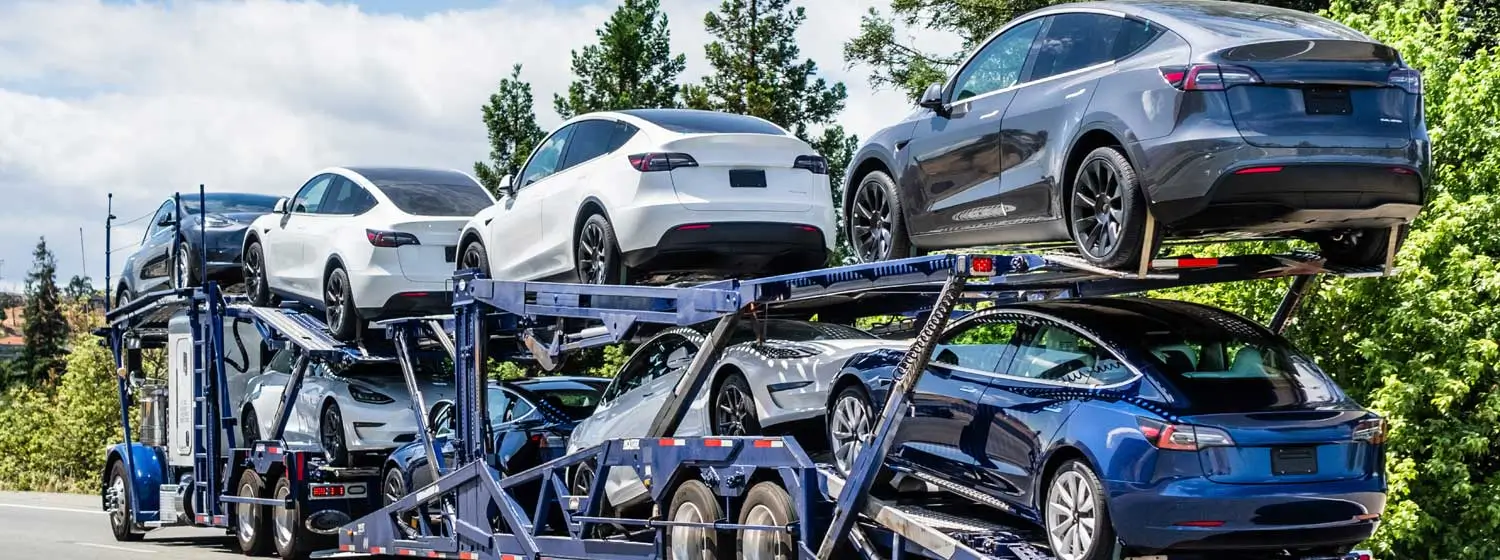
EV car shipping demands a more cautious approach than regular cars. The battery alone adds between 1,000 and 2,000 pounds, which triggers weight fees and stricter loading procedures. Federal DOT rules require carriers to maintain EV batteries at 20 to 50% charge throughout transport to prevent overheating or thermal issues.
Extreme weather situations call for enclosed transport, since lithium batteries don't react well to temperature swings. Only work with auto-transport companies that are certified to handle EVs and provide insurance in terms of battery damage.
How Has EV Car Shipping Changed in 2025?
Electric vehicle transport in 2025 means dealing with more than just four wheels and a motor. You are transporting a high-voltage system that needs careful handling across different weather conditions and road types.
After several transport incidents involving EVs around the world, the Department of Transportation (DOT) and Federal Motor Carrier Safety Administration (FMCSA) have tightened their rules on lithium-ion battery handling this year.
The battery pack alone makes your EV anywhere from 1,000 to 2,000 pounds heavier than a gas car. This impacts everything from how many cars fit on a trailer to what materials can be used to strap it down. Drivers and loading crews now complete EV-specific training covering fire response, non-metallic securement gear, and emergency battery disconnection procedures.
Insurance companies have adapted too. Most won't cover battery damage under standard policies, so you need a carrier with EV-specific coverage written into their contract.
With a 45% spike in EV shipments since 2023, these are not just recommended practices anymore. They have now become baseline EV shipping requirements for safety and legal compliance on the road.
How Do Pre-Shipping Requirements Vary by EV Model?
Preparing your EV for shipment depends entirely on which model you own. Miss a step and you risk battery problems or system alerts mid-route.
If You Own a Tesla:
The Model S and X need a 40 to 50% charge before you enable Transport Mode, which releases the parking brake and stops the wheels from creating drag.
For the Model 3 and Y, turn off Sentry Mode and Summon Standby, then switch on Tow Mode to keep the drive unit safe.
The Cybertruck is a different beast altogether. It weighs 6,800 pounds and is tall enough that you will need specialized low-clearance trailers, often with multiple axles, if you are opting for enclosed transport.
If You Own Other Major EV Brands:
The Ford F-150 Lightning integrates its battery pack under the bed, so tie-downs must attach only to the frame. Touch the battery compartment and you are asking for trouble.
Rivian's R1T and R1S have extra ground clearance, requiring extended ramps so nothing scrapes during loading.
Porsche Taycans and Audi e-trons demand enclosed auto-transport to protect premium finishes and manage cabin temperatures.
For the Hyundai Ioniq or Kia EV6, stick to the basics: 40% battery, alarms off, charging cable unplugged, and tow mode verified.
Every manufacturer publishes its own transport recommendations. However, working with an auto-transport carrier that already upholds these protocols eliminates trial-and-error on your dime.
What is the Safe Battery Level for Electric Vehicle Transport?
This remains the most common question EV owners ask before transport.
The standard that carriers follow now is a 20 to 50% charge window because it keeps your battery safe without adding unnecessary weight or risk.
When a lithium-ion battery remains partially charged, it stays thermally stable. That means less chance of overheating or short-circuiting when the trailer hits bumps or drives through varying temperatures. It also cuts down on weight, which lowers your shipping cost and reduces strain on the trailer.
When temperatures drop below 40°F in winter, charge closer to 30 to 50% since cold weather temporarily shrinks your battery's usable range. Whereas during summer heat above 90°F, stick to a 20 to 40% window to avoid thermal expansion and unnecessary stress on the cells.
To make it even safer, if your route crosses deserts or mountain passes with extreme conditions, enclosed or climate-controlled auto-transport helps buffer your battery against sudden temperature swings.
How Do Temperature Extremes Impact EV Car Shipping?
Temperature control is one of the most important EV shipping requirements that affects battery performance during transit.
Once temperatures climb above 95°F, lithium battery cells start degrading faster. On open trailers, your battery pack can bake in direct sunlight for hours, especially along desert stretches like I-10 or I-40 cutting through Arizona and Texas. EV owners must go with enclosed transport for their vehicle because it blocks heat radiation and keeps temperature swings under control.
When it drops below 32°F, your battery temporarily loses charge capacity and won’t charge well once it arrives at its destination. For routes through northern regions or mountain elevations, the battery demands some preconditioning. It includes warming the battery before it’s loaded and keeping the charge above 30% to maintain function.
The best auto-transport carriers track temperature forecasts along the shipping route and use climate-controlled options for high-value EVs when conditions call for it.
Are EV Car Shipping Surcharges Justified in 2025?
Electric vehicle transport comes with a higher price tag than shipping a fuel-powered car, and there are concrete reasons for that.
EVs are heavier, which alone adds $75 to $200 to your quote, depending on the route. Carriers need specialized gear, including non-metal wheel straps, low-angle ramps, and insulation mats that standard auto transport doesn't require.
To add to that, fewer carriers have EV certification, which limits your options and drives up demand. Insurance also runs higher because policies need to cover battery-related incidents that don't exist with gas-powered vehicles.
Price Comparison Table
|
Vehicle Type |
Average Weight |
Open Transport |
Enclosed Transport |
EV Surcharge |
|
Tesla Model 3 |
4,065 lbs |
$950-1,200 |
$1,400-1,750 |
+$100-150 |
|
Ford F-150 Lightning |
6,500 lbs |
$1,100-1,400 |
$1,650-2,100 |
+$150-200 |
|
Standard Sedan |
3,200 lbs |
$850-1,050 |
$1,250-1,550 |
N/A |
For a transparent estimate, try Direct Connect’s Cost to Ship a Car Calculator. It factors in EV weight, battery type, and distance to deliver precise and upfront quotes.
Can Your Carrier Handle Electric Vehicle Transport?
Before you book a carrier, find out if they hold EV transport certification or have completed lithium-battery training. Assess their protocol in case of thermal events or battery alerts during transit.
Verify the use of non-metal straps to prevent electrical conductivity issues. Last but not least, make sure their insurance explicitly covers battery damage, and is not just limited to the vehicle body.
Warning Signs
Walk away if answers about EV car shipping sound vague or dodgy. Be suspicious of quotes that seem too cheap because they are probably skipping necessary equipment or proper insurance. If they don't offer dedicated coverage for electronics or battery systems, move on to another carrier.
Legitimate carriers, like Direct Connect Auto Transport, adhere to FMCSA EV shipping regulations and comply with manufacturer-approved standards. Plus, they are always ready to prove it!
Is Enclosed EV Car Shipping Worth the Premium Price?
About 73% of EV owners prefer enclosed transport for Tesla shipping because it keeps battery temperatures more consistent throughout the trip.
Enclosed trailers shield the undercarriage from road debris that could strike the battery pack, and insurance companies mostly offer better coverage when the vehicle has not been exposed to the elements. There is also less electromagnetic interference inside an enclosed space, which matters for vehicles packed with sensitive electronics.
Open transport still has its place, though. For EV car shipping under 500 miles in decent weather, or if you are shipping a standard range model and need to keep costs down, open carriers handle the job without issue.
The shorter the distance and the milder the conditions, the less you need the extra protection that enclosed transport provides. It all comes down to weighing the risks against what you are willing to spend on your electric vehicle transport.
Your EV Car Shipping Preparation Checklist for 2025
One Week Before Shipping
Plan your charging schedule so you hit the target level by pickup day, and run any available software updates. Record your current range and battery health for reference.
24 Hours Before
Switch on transport or tow mode depending on your model, and turn off mobile app access to prevent accidental commands during transit. Also, pull out your charging cables and any other accessories.
Day of Pickup
Double-check that the charge falls between 20 and 50% of the window. Take photos of your battery status screen showing charge level and battery health. Even better, if you give the carrier written instructions on how to shut down the battery in case of an emergency.
Are You Covered for EV-Specific Insurance Risks?
Most standard policies don't address battery degradation or software damage claims unless specified. Charging port issues need their own line in the coverage as well. Above all, range disputes after delivery need clear policy language to back up your claim.
To protect your vehicle and yourself, document everything from the start. Most times, it will be your best proof in any insurance claim.
Get a battery health report generated before the carrier arrives, and capture screenshots of your recent charging history. Also, try to collect any service records that prove the condition of your EV before it left your possession.
What Steps Should You Take Post-Delivery?
Right when your EV gets delivered, verify the battery level before signing off on the paperwork. Test every electronic component, including the navigation, displays, and climate system, to catch any malfunctions early.
Remember to plug in and confirm the vehicle charges normally without errors or delays. If you see any error codes or warning lights, photograph them immediately so you have documentation if issues escalate.
In the next two days following delivery, charge your EV fully to recalibrate the battery system after its time on the road. Watch for anything unusual, like faster-than-normal battery drain, temperature warnings, or sluggish charging speeds.
Check whether any software updates are available and install them. Sometimes, the recent updates fix the glitches that surface after the vehicle has been stationary for a while. Don’t forget to test your regenerative braking a few times during normal driving to confirm it's engaging properly and responding the way it should.
Power Up Your Next Move
EV car shipping in 2025 doesn't revolve around getting your car from point A to point B. It involves protecting a battery system that costs thousands to replace.
The basics apply to every electrical vehicle transport, regardless of whether you own a Tesla, Rivian, or Porsche Taycan. Maintain your charge between 20 and 50%, opt for enclosed transport when conditions demand, and stick with EV-certified carriers who know what’s at stake. These EV shipping requirements keep your vehicle safe from the moment it gets loaded until you plug back in.
Direct Connect Auto Transport takes the guesswork out of the process. Our carrier network has moved over 10,000 EVs since 2020, following the manufacturer’s transport guidelines. We also work around insurance policies that cover battery-related damage.
Get your free EV shipping quote today and move your vehicle with the expertise it deserves.
Frequently Asked Questions
Can you ship a Tesla with Autopilot engaged?
No, you need to turn off all autonomous features before Tesla shipping. If you leave any self-driving systems active, be prepared to encounter safety risks during loading, transit, and unloading.
What happens if an EV battery dies during transport?
Professional carriers bring portable charging equipment to restore enough power for safe handling. They can add just enough charge to move the vehicle on and off the trailer without complications.
Are EVs more likely to be damaged during shipping?
EVs are not more fragile than gas cars, but they do need battery-specific precautions. Following proper handling protocols keeps the battery and vehicle safe throughout auto-transport.
How much extra does it cost to ship an electric vehicle?
Expect to pay an additional $100 to $200 compared to shipping a conventional car. This surcharge covers the extra weight from the battery pack and the specialized handling procedures required.
Can EVs be shipped to Hawaii or Alaska?
Yes, but you will need to provide additional battery documentation for these routes. Remote destinations have more stringent regulations around transporting lithium-ion batteries over long distances or across water.